

Pipeline Right-of-Way Acquisition: A Specialized Guide for Oil, Gas, Water, and Energy Pipeline Projects
A specialized guide to pipeline right-of-way acquisition — easement widths, surface and subsurface rights, FERC and USACE permitting, mineral severance interactions, agricultural impacts, and corridor coordination across hundreds of parcels.
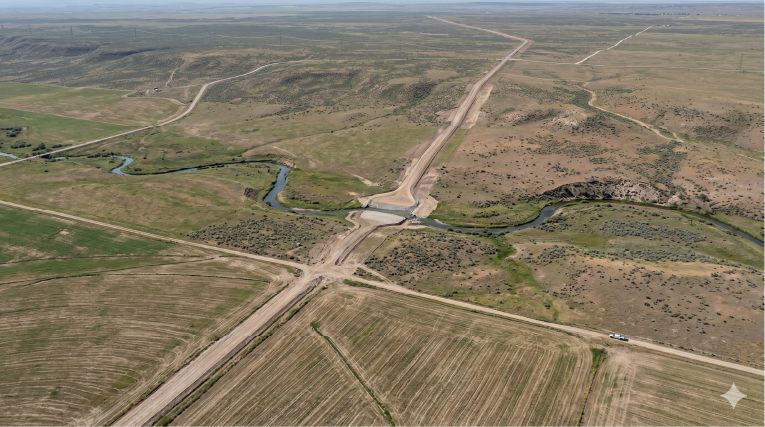
Pipeline right-of-way acquisition is its own discipline within the broader ROW field. Pipelines are linear, long, and corridor-driven; they cross hundreds or thousands of parcels; they involve subsurface installation with continuing surface and access rights; they often trigger federal jurisdiction through FERC, USACE, BLM, or USFS; and they raise landowner concerns — safety, restoration, future development restrictions, mineral interactions — that don't show up the same way on highway or utility projects. Done well, pipeline ROW combines disciplined corridor coordination with parcel-by-parcel negotiation, integrated permitting, and careful mineral and water-rights work.
This guide covers what makes pipeline ROW different, the typical easement structure, the federal nexus through FERC and USACE, the agricultural and surface-use issues that shape negotiations, and how project teams keep multi-state corridors moving without losing local landowner relationships.
Why pipeline ROW is its own discipline
Pipeline projects share characteristics that don't all apply to highway or utility ROW work:
Linear and long. A single project often runs 50, 200, or 500+ miles, crossing hundreds or thousands of parcels, multiple counties, and sometimes multiple states. Coordination at the corridor level becomes its own job.
Subsurface installation. The pipe sits underground. Surface restoration, depth-of-bury commitments, and long-term coexistence with surface uses (farming, grazing, development) drive most landowner concerns.
Federal jurisdiction is common. Interstate gas pipelines fall under FERC. Wetland and water crossings trigger USACE Section 404 permits. Federal land crossings trigger BLM or USFS right-of-way grants. These overlap with ROW acquisition in ways highway and utility projects don't always experience.
Mineral severance interactions. Pipelines crossing oil and gas country in Colorado — the DJ Basin, the Piceance Basin — interact with active mineral development, severed mineral estates, and operator relationships in ways that complicate routine surface-easement work.
Long-term landowner relationships. Once a pipeline is in the ground, it's there for decades. The easement holder needs continuing surface access, periodic maintenance rights, and the ability to inspect, repair, and replace. Landowners need restoration commitments and predictable rules for future maintenance access.
For these reasons, experienced pipeline ROW teams structure their work differently from a typical highway program — and pricing, schedules, and team composition reflect that.
How pipeline ROW differs from highway and utility ROW
A few practical contrasts:
Width. A highway might require a 100-foot fee acquisition at the centerline. A pipeline easement is typically narrower — 50 to 75 feet permanent plus 50 feet of temporary construction easement is a common range — because the pipe itself only takes up a couple of feet of width once buried.
Property interest. Highways often acquire fee simple. Pipelines almost always acquire easements — permanent for the pipe and surface use restrictions, temporary for construction.
Surface use. Highway corridors permanently displace surface use. Pipeline easements typically allow continued grazing, crop production, and many surface activities once construction is complete, with restrictions on permanent structures, deep-rooted trees, and other interferences.
Restoration. Pipeline easements live or die by restoration. Topsoil segregation and replacement, reseeding to landowner specifications, drainage restoration, fence and gate handling, and weed control are all part of the deal.
Maintenance access. Pipeline operators need decades of access for inspection, repair, and replacement. Easement language defining how, when, and where access happens is one of the most negotiated parts of the document.
Typical pipeline easement widths
Widths vary by pipeline diameter, regulatory class, terrain, and operator practice, but typical ranges in the West:
The temporary construction easement (TCE) sits adjacent to the permanent easement during construction and provides space for spoil storage, equipment travel, welding, and stringing. It expires when construction is complete and surface restoration is accepted.
For a deeper look at how easement valuation works, see our easement vs. fee simple guide and our just compensation and property valuation guide.
Surface use vs. subsurface rights
A pipeline easement separates surface and subsurface rights more carefully than most other easement types.
Subsurface rights. The operator owns the pipe and the right to maintain it indefinitely at the agreed depth-of-bury. The landowner cannot install anything that would damage or interfere with the pipe — deep foundations, buried utilities crossing without coordination, subsurface excavation in the easement.
Surface rights — operator. The operator gets the right to access the surface for inspection, maintenance, repair, and replacement, typically with notice obligations and damage compensation requirements.
Surface rights — landowner. The landowner retains most surface use — grazing, crop production, low-rooted vegetation, light fencing — subject to restrictions designed to protect the pipe and access. Most easements specifically prohibit permanent structures, deep-rooted trees, and surface improvements that would impair the operator's rights.
Landowners often underestimate how much surface use they keep. Project teams sometimes overstate it. The easement language settles the question, which is why it has to be precise.
Depth-of-bury commitments
Depth-of-bury is the distance from the natural ground surface to the top of the pipe. It's a critical operational and safety parameter, and it shows up in easement negotiations more than any other technical detail.
Typical commitments:
Depth-of-bury affects how much surface use the landowner retains and what the operator's restoration obligations look like. A landowner running a 40-foot ripper through a wheat field needs the pipe deep enough that routine farming doesn't risk strikes.
Restoration standards
Restoration is what landowners remember about a pipeline ten years after construction. Specifications worth getting in writing:
Topsoil segregation and replacement. Topsoil is stripped and stockpiled separately during construction, then replaced in its original profile. The depth and method should be specified.
Reseeding. Native seed mix vs. agricultural mix, certified weed-free, applied at agronomic rates, with re-seeding obligations if the first seeding doesn't take.
Drainage restoration. Existing tile drainage, surface ditches, and water flow patterns restored to pre-construction condition.
Subsoil compaction relief. Deep ripping or other measures to break up compaction caused by equipment travel.
Fence replacement. Specifications for fence type, gate quality, and timing of replacement.
Crop loss compensation. Payment for crop loss during construction and during the establishment period of restored vegetation.
Weed control. Multi-year weed control obligations on the easement, especially in jurisdictions where landowners can be cited for noxious weeds.
Final acceptance. A defined process for landowner acceptance of restoration before final payment is released.
Vague restoration language produces multi-year disputes. Specific restoration language closes them out cleanly.
Maintenance access rights
Pipelines need decades of access. Easement language has to balance the operator's legitimate maintenance needs against the landowner's reasonable expectation of predictable, limited intrusions.
Common provisions:
Landowners who feel respected during routine maintenance are landowners who don't sue when something unusual happens. The investment in maintenance access language pays off for the entire life of the pipeline.
Mineral severance interactions
In Colorado, severed mineral estates are common, and pipelines often run through active oil and gas country. The interactions are tricky.
The DJ Basin in Weld, Adams, and Boulder counties is one of the most active oil and gas plays in the country, with active drilling, severed mineral estates, and rapid Front Range development overlapping in the same parcels.
The Piceance Basin on the Western Slope (Garfield, Rio Blanco, Mesa counties) is gas country, with multi-decade leases, federal mineral interests, and active production.
In both basins, several issues recur:
These issues surface during title research and due diligence. A thorough title report identifies severed mineral estates; the harder work is figuring out who owns them today, what leases are in place, and what surface use the operators are planning. Skipping that work is how pipelines discover, mid-construction, that someone else has equal or superior rights to the surface they're occupying.
FERC jurisdiction for interstate gas pipelines
Interstate natural gas pipelines fall under the Federal Energy Regulatory Commission (FERC) under the Natural Gas Act. FERC issues a certificate of public convenience and necessity that, among other things, grants the certificate holder federal eminent domain authority under 15 U.S.C. § 717f(h).
What this means in practice:
Intrastate gas pipelines (those that operate entirely within one state) are regulated by the relevant state public utilities commission, not FERC. In Colorado, that's the Colorado Public Utilities Commission. Eminent domain authority for intrastate gas pipelines comes from state statute, not federal law.
For oil pipelines, jurisdiction varies. The Pipeline and Hazardous Materials Safety Administration (PHMSA) regulates safety for hazardous liquid and gas pipelines, but PHMSA isn't a permitting agency. Eminent domain authority for oil pipelines depends on state law.
USACE Section 404 and NWP 12 for water and wetland crossings
Pipeline crossings of waters of the United States — rivers, streams, wetlands — require U.S. Army Corps of Engineers (USACE) authorization under Section 404 of the Clean Water Act.
For most utility-line crossings, including pipelines, Nationwide Permit 12 (NWP 12) provides expedited authorization if the activity meets specified conditions. NWP 12 has been the backbone of pipeline crossing authorizations for decades, though it has been litigated and revised periodically — projects need to confirm the current version of the permit and its conditions when scheduling.
When NWP 12 doesn't apply or its conditions aren't met, the project requires an individual Section 404 permit, which involves an alternatives analysis, public notice, mitigation requirements, and a longer timeline.
Integrated permitting and project management keeps Section 404 work moving in parallel with ROW acquisition rather than sequentially.
Railroad crossing licensing
Pipelines that cross railroad rights-of-way need crossing licenses from the railroad. In the Western U.S., the dominant Class I railroads are BNSF and Union Pacific. Each has its own application, engineering review, and licensing process.
A few practical notes:
Agricultural impact considerations
Pipelines through agricultural land trigger a specific set of issues:
Center pivots. Pipeline alignments need to account for center-pivot irrigation. A pipeline running through a pivot circle disrupts irrigation patterns, requires temporary moves, and may permanently constrain future pivot locations. Coordination with the operator is essential.
Drainage tile. Tile-drained farmland is common in some areas of the West. Pipeline trenching crosses tile lines; restoration must reconnect them in working order, with documented tile mapping before construction.
Soil structure. Heavy equipment compaction, mixed topsoil and subsoil, and disrupted profile all reduce productivity if not properly addressed in restoration.
Crop loss. Compensation for crops lost during construction, restoration establishment, and any reduced yields in the years after restoration. Yield-based formulas tied to county FSA averages are common.
Livestock. Fencing, gate handling, water sources, and grazing rotation all need coordination during construction. Calving and lambing seasons are typical no-construction windows.
Future development. Some easements restrict landowner ability to develop the surface (build structures, install future utilities) over the pipeline. The breadth of those restrictions is negotiable.
Agricultural landowners who feel their operations were respected through construction become long-term neighbors. Those who don't become long-term plaintiffs.
Landowner concerns specific to pipelines
Beyond the issues common to all ROW work, pipelines raise some landowner concerns that highway and utility ROW often don't:
Safety. Pipeline incidents are rare but high-profile. Landowners ask about leak detection, emergency response, depth-of-bury, and PHMSA safety standards. Honest answers about industry safety performance, paired with concrete commitments on monitoring and response, build trust.
Future development restrictions. A buried pipeline limits where future buildings, deep-rooted trees, and certain utilities can go. Landowners with development plans for their property need to understand these restrictions before signing.
Resale and financing. Some buyers and lenders treat pipeline easements as a discount factor. The actual market impact varies; an honest read on this matters in negotiations.
Long-term presence. A pipeline is there for decades. The landowner relationship is multi-generational. Heirs and future owners inherit both the easement and any unresolved issues from the original deal.
These concerns are legitimate. The best response is precise easement language, fair compensation, and credible commitments — not dismissal.
Corridor-level coordination
Pipeline projects aren't acquired one parcel at a time in a vacuum. They're acquired as a corridor, and that creates coordination demands a single-parcel mindset misses.
Sequencing. Start with cooperative landowners, larger parcels, and key corridor anchors. Build momentum and demonstrate the project is treating people fairly.
Consistency. Landowners on a corridor talk. Different deals on adjoining parcels — for the same kind of taking on similar land — produce friction. Consistent valuations and consistent terms are essential.
Information flow. A single point of contact per parcel, but a centralized corridor team that tracks every issue, every commitment, and every deviation. Hand-offs are where commitments get lost.
Schedule integration. ROW, environmental permitting, FERC certificate, USACE 404, BLM/USFS right-of-way grants, railroad crossings, and engineering all run on parallel critical paths. The team that integrates them — not the team with the best individual disciplines — finishes on schedule.
Frequently asked questions
What is pipeline right-of-way acquisition?
Pipeline right-of-way acquisition is the process of obtaining the easements and surface rights a pipeline project needs to install and operate a buried pipe across private and public land. It typically involves a permanent easement (50-75 feet wide is common) plus a temporary construction easement, with detailed terms covering depth-of-bury, restoration, surface use, and maintenance access. For interstate gas pipelines, the project also obtains a FERC certificate that includes federal eminent domain authority.
How wide is a typical pipeline easement?
Pipeline easement widths vary by pipe diameter and project. Small gathering lines (4-12 inch) typically use 30-50 feet of permanent easement plus 25-40 feet of temporary construction easement. Mid-size transmission pipelines (12-24 inch) typically use 50-75 feet permanent plus 50 feet temporary. Large transmission lines (24-42 inch) can run 75-100 feet permanent plus 50-75 feet temporary. Co-located corridors with multiple pipes are wider. The permanent easement remains in place after construction; the TCE expires.
What's the difference between a permanent and temporary pipeline easement?
A permanent easement gives the operator the right to install, operate, and maintain the pipeline indefinitely, with continuing surface and access rights. It's recorded against the property and runs with the land. A temporary construction easement (TCE) is a time-limited right — typically 12-36 months — for staging, equipment travel, spoil storage, and welding during construction. The TCE expires when construction is complete and restoration is accepted. Both are paid as separate property interests on the same parcel.
Does FERC apply to all pipelines?
No. FERC has jurisdiction over interstate natural gas pipelines under the Natural Gas Act and over interstate oil pipelines for tariff matters under the Interstate Commerce Act. Intrastate gas pipelines (those operating entirely within one state) are regulated by the state public utilities commission — in Colorado, the Colorado PUC. PHMSA regulates safety for both interstate and intrastate hazardous liquid and gas pipelines, but PHMSA is not a permitting agency. Water pipelines and gathering systems have their own state and local regulatory frameworks.
What is NWP 12 and when does it apply?
Nationwide Permit 12 is a U.S. Army Corps of Engineers general permit under Section 404 of the Clean Water Act that authorizes utility-line crossings of waters of the United States, including wetlands, with expedited review when specified conditions are met. It applies to most pipeline stream and wetland crossings that meet acreage thresholds, mitigation requirements, and other terms of the permit. When NWP 12 doesn't apply, the project must obtain an individual Section 404 permit, which involves a longer review and an alternatives analysis.
How do severed mineral estates affect pipeline easements in Colorado?
Severed mineral estates can complicate pipeline easements significantly. Colorado follows the dominant-mineral-estate doctrine — mineral owners have rights to use the surface for mineral development that can override unrelated surface easements granted by the surface owner. In active basins like the DJ Basin (Weld, Adams, Boulder) and Piceance Basin (Garfield, Rio Blanco, Mesa), pipelines often need accommodation agreements or non-disturbance agreements with mineral owners and operators in addition to the surface owner. Title research identifies severed minerals; further due diligence resolves the relationships.
What restoration commitments should landowners ask for?
Landowners should ask for explicit, written commitments on topsoil segregation and replacement, reseeding (with native vs. agricultural mixes specified, certified weed-free), drainage and tile restoration, subsoil compaction relief, fence and gate replacement specifications, crop loss compensation during construction and establishment, multi-year weed control on the easement, and a defined acceptance process for restoration. Vague restoration language produces multi-year disputes. Specific language closes them out and is one of the highest-value parts of the negotiation.
Can I still farm or graze over a pipeline easement?
In almost all cases, yes. Pipeline easements typically allow continued grazing, crop production, and most normal surface uses on the easement once construction is complete and the pipe is buried at the agreed depth. Restrictions usually apply to permanent structures, deep-rooted trees, deep ripping or excavation, and certain other surface improvements that could damage the pipe. The specifics are spelled out in the recorded easement, which is why depth-of-bury, surface restrictions, and reservation language are negotiated carefully.
Do interstate gas pipelines have eminent domain authority?
Yes. Holders of a FERC certificate of public convenience and necessity have federal eminent domain authority under Section 7(h) of the Natural Gas Act, codified at 15 U.S.C. § 717f(h). They can file condemnation in federal district court if good-faith negotiation fails. In practice, FERC-certificated pipelines, like other ROW projects, settle the vast majority of parcels through negotiation. Condemnation is reserved for cases where genuine effort hasn't produced agreement. Intrastate pipelines and oil pipelines rely on state-law eminent domain authority where it exists.
How long does pipeline right-of-way acquisition take?
Pipeline ROW timelines vary by project size, jurisdictional complexity, and corridor length. A small intrastate gathering line might take 6-12 months. A mid-size transmission project crossing several counties typically runs 12-24 months. A FERC-certificated interstate gas pipeline can run 24-48 months from initial outreach to construction-ready ROW, with the FERC certificate process driving much of the schedule. NEPA review, USACE 404 authorization, BLM/USFS right-of-way grants, and railroad crossing licenses all run on parallel critical paths.
Build pipeline corridors that hold up over decades
A pipeline easement is a 50-year relationship with every landowner on the corridor. The easements that hold up — and the projects that get built on time — are the ones built on precise language, fair compensation, integrated permitting, and respect for the people whose land the pipe crosses.
Western States Land Services has spent more than 45 years acquiring right-of-way for pipelines, utilities, highways, and municipal projects across Colorado and the Mountain West. We have closed over 10,000 utility parcels and 800+ CDOT parcels, plus extensive pipeline corridor work in the DJ Basin, Piceance Basin, and across multi-state midstream and gathering systems. Our integrated team also provides title research and due diligence, permitting and project management, and Uniform Act-compliant relocation assistance — so a single team carries the project from corridor planning through construction-ready ROW.
If you're scoping a pipeline corridor, working through a contested route, or need a candid read on your acquisition strategy, start a conversation. For more context, see our complete guide to right-of-way acquisition for the Western U.S., our Colorado pillar, and our companion eminent domain, valuation, and landowner's guide.


Frequently Asked Questions
Have questions about our sustainability initiatives, eco-friendly practices, or how you can make a positive impact?
Western States Land Services is headquartered in Loveland, Colorado. We primarily serve Colorado, Wyoming, Nebraska, Kansas, New Mexico, Utah, and Texas, with experience working on projects across the broader Mountain West.
Western States Land Services was founded in 1981. The firm has been providing right-of-way acquisition, relocation, and permitting services in Colorado and the Mountain West for more than 45 years. Our team carries more than 150 years of combined industry experience.
Yes. Western States Land Services is prequalified with the Colorado Department of Transportation (CDOT) for right-of-way services. The firm is also experienced in FHWA requirements and fully compliant with the Uniform Relocation Assistance and Real Property Acquisitions Policies Act for federally regulated projects.
We serve public agencies, municipal governments, state departments of transportation, investor-owned utilities, oil and gas companies, pipeline operators, and private infrastructure developers. We have delivered right-of-way services across every sector — from CDOT highway corridors and utility transmission lines to rural pipeline routes and municipal capital improvement projects.
We offer the staffing capacity of a large firm with the direct access and personal accountability of a specialized boutique. Clients work with senior leadership — not a call center. Our agents meet landowners face-to-face. Our regulatory knowledge is deep rather than generalized. We have never needed to ramp up on Colorado or Mountain West rules. We have been working inside them for over 40 years.
Yes. Western States Land Services has experience supporting eminent domain proceedings, including preparing waiver valuations, providing expert witness testimony, and coordinating with legal counsel throughout the condemnation process. Our team has worked alongside attorneys on both agency-initiated and privately sponsored condemnation actions across Colorado.
