

A Landowner's Guide to Right-of-Way Acquisition: What to Expect When a Project Crosses Your Property
A clear, practical guide for landowners contacted about a right-of-way acquisition — your rights, what's negotiable, when to hire an attorney, the Uniform Act, and what to expect at every step.
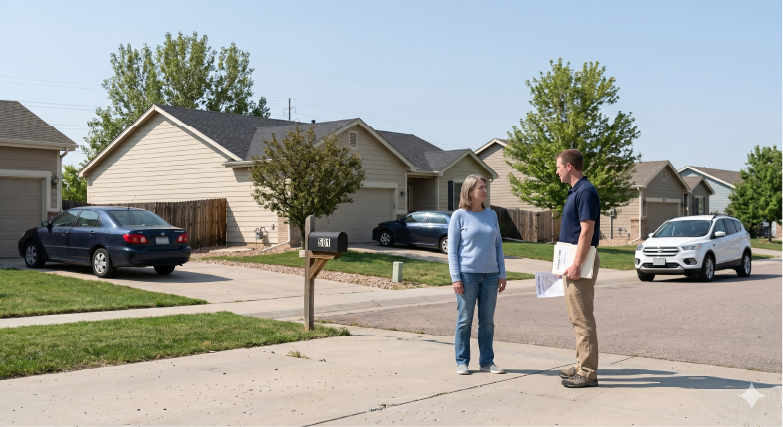
If a right-of-way agent has knocked on your door, sent you a letter, or left a voicemail about a project crossing your property, you're not alone — and you have more rights than the letter might make obvious. A right-of-way (or "ROW") acquisition is the legal process a public agency, utility, or pipeline uses to obtain the land rights it needs to build infrastructure across private property. You don't have to figure it out on the fly, you don't have to sign anything immediately, and you have meaningful protections at every step — including the right to negotiate, the right to your own appraisal, and, on federally funded projects, the right to certain cost reimbursements.
This guide walks through what's actually about to happen, what's negotiable, what's not, and how to make the best of a situation you didn't ask for.
What's actually happening when an agent contacts you
A project — a highway, a transmission line, a pipeline, a water main, a fiber installation — is being planned or built, and your property is in its path. The project sponsor needs to acquire either ownership of a piece of your land or, more commonly, an easement that gives them defined rights to use part of it.
The agent contacting you works either for the project sponsor directly or for a right-of-way firm hired to handle acquisitions. Their job is to explain the project, present an offer, answer questions, and try to reach an agreement. They are not the appraiser, and they don't usually have unilateral authority to change the offer significantly — but they're the person who carries your concerns back to the project team.
A few things worth knowing up front:
You almost never have to make a decision on the first visit.
You have the right to read the offer carefully, ask questions, and consult professionals before responding.
The agent is required, on most public projects, to give you a written offer based on a credible appraisal. Verbal offers without supporting documentation are a sign something is off.
The typical timeline a landowner experiences
Every project is different, but here's the arc most landowners go through:
Months -6 to -3: Notice or initial contact. A letter or phone call letting you know your property is in a project corridor. The project may not have firm engineering yet; this may just be a heads-up.
Months -3 to -1: Title research and appraisal. The project orders title work to confirm ownership and an appraisal of your property. You may be asked to allow access for a survey or appraisal walkthrough. Most states allow project teams to enter for surveys with reasonable notice, and you typically can't permanently refuse, but you can negotiate timing.
Month 0: Written offer. A formal offer letter arrives, often with the appraisal report, a description of the property interest being acquired (fee, permanent easement, temporary construction easement), a proposed deed or easement, and an explanation of how compensation was calculated.
Months 1-3: Negotiation. You review, ask questions, raise concerns, and negotiate. Most acquisitions close in this window.
Months 3-6: Closing or escalation. If you reach agreement, you sign documents, the easement or deed is recorded, and you're paid. If you can't reach agreement, the project may file a condemnation action or revise the offer significantly.
Months 6-24: Construction and restoration. Work happens on the easement area. Restoration commitments — topsoil, reseeding, fence replacement — are completed. Final payments tied to crop damage or deferred items are issued.
Years onward: Long-term coexistence. The infrastructure stays. You continue to own the land (in the case of an easement) and use the surface for compatible purposes. The project owner has periodic maintenance access.
The agent's job and what to ask them
A good right-of-way agent is your primary point of contact through the process. They aren't your advocate — they work for the project sponsor — but they should be straightforward, well-prepared, and respectful.
Reasonable things to ask:
A good agent will answer all of these candidly. If the answers are evasive, that's information.
The offer letter and what's in it
A typical offer letter on a federally funded or public project includes:
Read the easement language carefully — that's the document that defines what the project can and cannot do on your property forever. Width, depth, surface restrictions, restoration obligations, fence and gate handling, and access provisions are all in there, and all of them are negotiable.
Your right to negotiate
You don't have to accept the first offer. You have the right to negotiate, and most projects expect it. On a well-run program, more than 95% of acquisitions close through voluntary negotiation rather than condemnation, which means there's almost always room to talk.
Negotiation isn't only about price, though price is part of it. Bring concerns, ask for changes, and document everything in writing. Email or written follow-up after a meeting is good practice — it creates a paper trail that protects both sides.
Your right to your own appraisal
On federally funded projects covered by the Uniform Act (49 CFR Part 24), you have the right to obtain your own appraisal, and the project will reimburse reasonable appraisal costs up to a defined cap. This is one of the most underused landowner rights.
Why it matters:
Pick an appraiser experienced in eminent domain work, not a residential-only appraiser. The methodology and report standards are different.
What's negotiable beyond price
Many landowners focus only on price and miss real value in non-monetary terms. Things that are routinely negotiable:
Width. A project may be asking for more easement width than they actually need. Question the width and ask for a justification.
Access. Where can the project enter the easement? What roads, gates, or paths will they use? When and how?
Restoration. Topsoil depth, reseeding mix, drainage restoration, fence replacement specifications, gate handling, weed control responsibilities. Get these in writing in the easement.
Timing. Construction windows that avoid calving season, harvest, or other operational realities. Restrictions on weekend or after-hours work.
Reservations. The right to continue grazing, growing crops, or running surface activities on the easement after construction. Most utility easements allow compatible surface use — make sure yours says so explicitly.
Future maintenance. Notice requirements before maintenance access. Compensation for crop or improvement damage during maintenance.
Vegetation. Whether the project can clear trees, brush, or specific protected vegetation.
Indemnification and insurance. Who is responsible if the project's contractor damages something or causes injury.
Recording specifics. How the easement is described in the recorded document — narrow, specific easements are better than broad, vague ones.
These terms shape what the easement looks like in the field and what your relationship with the project owner looks like for the next 50 years. The price is paid once. The easement language lasts.
When to hire an attorney
Not every right-of-way acquisition needs an attorney. Many close cleanly with a fair offer and reasonable negotiation. But some situations call for legal counsel:
Look for an attorney who does eminent domain and right-of-way work specifically, not a general real-estate lawyer. In some states and narrow circumstances, you can recover certain attorney fees if you ultimately recover materially more than the offered amount — but the rules are specific, and your attorney can walk through them.
What happens if you don't agree
If negotiation reaches an impasse and the project has eminent domain authority — most public agencies, public utilities, and certain pipelines do — they may file a condemnation action in court.
Condemnation is the legal process that lets the project compel transfer for just compensation. It doesn't mean the project gets your land for free or on its own terms. It means a court (or commission, or jury depending on the state and your election) decides:
You're entitled to legal representation, an independent appraisal, and the chance to argue for a higher value. Condemnation cases often settle before trial — Colorado, for example, requires mediation. Verdicts can come in higher than the original offer, sometimes substantially.
For a deeper look at the condemnation process, see our eminent domain guide and our companion piece on just compensation and property valuation.
Eminent domain protections you keep
Even in condemnation, you have meaningful protections:
Condemnation is adversarial, but it isn't lawless. The Constitution and your state statutes set the floor on how the project can treat you.
Your rights after the easement is granted
If you grant an easement (rather than selling in fee), you keep ownership of the land. The project owner has the rights spelled out in the easement, and you keep everything else — what's called the bundle of rights.
In practice, that usually means:
What you give up is the right to do anything that interferes with the easement's purpose — building structures over a buried pipeline, planting trees in a transmission corridor, blocking the access route. Those restrictions are spelled out in the easement document, which is why the language matters so much.
Tax implications of right-of-way payments
Payments for right-of-way acquisitions can have significant tax implications, and the rules are specific to your situation. General points worth knowing:
Talk to a tax professional — ideally one familiar with eminent domain and Section 1033 — before signing. The right structure can save real money.
Frequently asked questions
Do I have to sell my property to a public agency?
You can refuse a specific offer and you can negotiate. If the project has eminent domain authority — most public agencies, public utilities, and certain pipelines do — they can ultimately compel transfer through condemnation. But you keep the constitutional right to just compensation, the right to challenge valuation in court, and the right to negotiate non-price terms throughout. In practice, more than 95% of right-of-way parcels close through voluntary negotiation rather than condemnation.
Can I refuse a survey or appraisal access?
Most states allow project teams to enter property for surveys, environmental studies, and appraisal work, often with reasonable notice. You typically cannot permanently refuse, but you can negotiate timing, accompany the team, and require notice before each visit. Refusing access often delays the project and your own offer, since the project can't generate a credible appraisal without seeing the property. A reasonable approach is to allow access on terms you're comfortable with rather than block it entirely.
What is the Uniform Act and does it apply to me?
The Uniform Relocation Assistance and Real Property Acquisition Policies Act of 1970, codified at 49 CFR Part 24, governs how federally funded projects acquire property and treat displaced residents and businesses. It applies if any federal money is involved — FHWA, FTA, EPA, HUD, USDA, federal broadband, federal land permits with conditions. If the Uniform Act applies, you're entitled to a written offer at or above appraised value, reimbursement of certain appraisal costs, and relocation assistance if you're displaced.
Can I get my own appraisal at the project's expense?
On federally funded projects under the Uniform Act, you can obtain your own appraisal and request reimbursement of reasonable costs, typically up to a defined cap that varies by region. The independent appraisal is leverage in negotiation and evidence in court if needed. Hire an appraiser with eminent domain experience, not just a residential appraiser. On non-federally funded projects, the Uniform Act doesn't apply, but you can still hire your own appraiser at your own cost.
What if I think the offer is too low?
Negotiate first. Provide additional information the appraiser may have missed — recent comparable sales, access issues, drainage problems, unusual uses. Ask for non-monetary improvements: better restoration, narrower easement, timing concessions. Obtain your own appraisal, especially on federally funded projects where costs are reimbursed. If negotiation doesn't close the gap, consult an eminent domain attorney about your options. If condemnation is filed, valuation goes to a court, commission, or jury.
What's the difference between an easement and selling my land?
A fee sale transfers full ownership — surface, subsurface, and air — to the buyer. You're done with that piece of land. An easement grants the buyer specific, defined rights (typically to install and maintain infrastructure) while you keep ownership and can continue to use the surface for compatible purposes. Most utility, pipeline, and transmission projects acquire easements rather than fee. For more detail, see our easement vs. fee simple guide.
Can I still use my land after granting an easement?
Almost always yes, for compatible purposes. After granting a typical utility or pipeline easement, you can continue grazing, growing crops, fencing the area (subject to access provisions), and using the surface in ways that don't interfere with the easement's purpose. What you usually can't do is build permanent structures over the easement, plant trees in a transmission corridor, or block the project's access. The specific terms are spelled out in the recorded easement document, which is why the language matters.
Do I have to pay taxes on a right-of-way payment?
Easement payments are usually treated as a reduction in your basis in the property up to the basis amount, with any excess potentially taxable as capital gain. Fee sales are typically treated as a sale subject to capital gains rules. Section 1033 of the Internal Revenue Code can defer gain on involuntary conversions if you reinvest in similar property within statutory windows. Relocation payments under the Uniform Act are generally not taxable. Talk to a tax professional familiar with eminent domain.
Should I hire an attorney?
Not every right-of-way acquisition needs an attorney. Many close cleanly through direct negotiation. Hire one when the offer is significantly below your own research, the easement language is unusually broad, eminent domain is being used or threatened, you have mineral or water rights complications, the partial taking causes substantial damage to the remainder, or the dollars are large enough that legal fees are a small percentage. Look for an attorney with specific eminent domain experience, not just general real estate.
What if my property has a tenant, mortgage, or co-owner?
These situations add complexity but don't block the acquisition. Tenants may have separate compensation rights, especially under the Uniform Act if displaced. Mortgages typically need lender consent or partial release for the affected area, handled at closing. Co-owners — including spouses, family LLCs, and inherited properties with multiple heirs — all need to sign. The project's title research should identify these issues early; if it didn't, raise them with the agent so the right people are at the table.
You don't have to navigate this alone
Right-of-way acquisitions are stressful because they're unfamiliar, the timelines feel artificial, and the documents are legalese. They don't have to be a fight. Most close through honest negotiation when the project team is reasonable and the landowner has clear information about their rights and options.
If you're a landowner working through a right-of-way situation and you want a candid, plain-language read on what's actually fair, Western States Land Services is happy to talk. We've worked the other side of this table for 45+ years — across more than 10,000 utility parcels, 800+ CDOT parcels, and hundreds of pipeline and municipal projects in Colorado and the Mountain West — and we know what reasonable looks like and what isn't. We provide right-of-way acquisition, title research and due diligence, permitting and project management, and Uniform Act relocation assistance for project sponsors, but we also answer landowner questions every week and we'll tell you straight what your situation looks like.
Start a conversation — there's no obligation and no agenda. For more context on the broader process, see our complete guide to right-of-way acquisition for the Western U.S., our Colorado pillar, and our eminent domain and valuation guides.


Frequently Asked Questions
Have questions about our sustainability initiatives, eco-friendly practices, or how you can make a positive impact?
Western States Land Services is headquartered in Loveland, Colorado. We primarily serve Colorado, Wyoming, Nebraska, Kansas, New Mexico, Utah, and Texas, with experience working on projects across the broader Mountain West.
Western States Land Services was founded in 1981. The firm has been providing right-of-way acquisition, relocation, and permitting services in Colorado and the Mountain West for more than 45 years. Our team carries more than 150 years of combined industry experience.
Yes. Western States Land Services is prequalified with the Colorado Department of Transportation (CDOT) for right-of-way services. The firm is also experienced in FHWA requirements and fully compliant with the Uniform Relocation Assistance and Real Property Acquisitions Policies Act for federally regulated projects.
We serve public agencies, municipal governments, state departments of transportation, investor-owned utilities, oil and gas companies, pipeline operators, and private infrastructure developers. We have delivered right-of-way services across every sector — from CDOT highway corridors and utility transmission lines to rural pipeline routes and municipal capital improvement projects.
We offer the staffing capacity of a large firm with the direct access and personal accountability of a specialized boutique. Clients work with senior leadership — not a call center. Our agents meet landowners face-to-face. Our regulatory knowledge is deep rather than generalized. We have never needed to ramp up on Colorado or Mountain West rules. We have been working inside them for over 40 years.
Yes. Western States Land Services has experience supporting eminent domain proceedings, including preparing waiver valuations, providing expert witness testimony, and coordinating with legal counsel throughout the condemnation process. Our team has worked alongside attorneys on both agency-initiated and privately sponsored condemnation actions across Colorado.
