

Easement vs. Fee Simple Acquisition: How to Choose the Right Property Interest for Your Project
When should infrastructure projects acquire fee simple versus an easement? A practical breakdown of cost, control, landowner impact, and long-term implications for ROW projects in the Western U.S.

Almost every infrastructure project hits the same fork in the road early on: should we buy the land outright, or acquire an easement?
The answer drives cost, schedule, landowner relationships, and what you can actually do on that property for the next several decades. Get it right and the project moves cleanly through acquisition. Get it wrong and you're either overpaying for rights you don't need or scrambling to renegotiate when the easement language can't carry the project's actual operations.
This article breaks down the practical differences between fee simple acquisition and easements, when each makes sense, and how experienced right-of-way teams help projects choose well from the start.
What is fee simple acquisition?
Fee simple is full ownership. When a project acquires property in fee, the original landowner conveys all rights to the project owner — surface, subsurface, and air rights — and steps out of the picture entirely. The project owner takes title, records a deed, and treats the property as its own going forward.
Fee simple is the most complete property interest American real estate law recognizes. It includes the right to occupy, modify, develop, lease, sell, and exclude. Once a project takes property in fee, the seller has no continuing claim to it.
What is an easement?
An easement is a defined, recorded right to use someone else's property for a specific purpose. The original landowner keeps title and continues to use the land in ways that don't conflict with the easement. The project owner gets only the rights the easement document spells out.
Easements come in several forms:
A permanent easement runs with the land and stays in place indefinitely. Most utility corridors, pipeline rights-of-way, and transmission line easements are permanent.
A temporary construction easement lasts only for the duration of construction — typically 12 to 36 months — and expires automatically. It gives the project room to stage equipment, access the work area, or temporarily disturb adjacent land.
An access easement grants the right to enter and cross property to reach a worksite or a separately-owned parcel.
A conservation or restrictive easement limits how property can be used, usually for environmental or historic reasons. These come up less often in infrastructure work but can affect what's available to acquire.
The key feature of any easement is that it's narrow by design. The document defines what the project can do, where, and under what conditions. Anything outside those boundaries belongs to the landowner.
Side-by-side: fee simple vs. easement
Here's how the two interests compare across the dimensions that matter on infrastructure projects:
Ownership and control
Fee simple: full ownership and control of the property.
Easement: project gets defined use rights; landowner retains ownership and uses the land in ways that don't conflict.
Cost
Fee simple: typically the most expensive option. The buyer pays for the full bundle of property rights.
Easement: priced based on the value of the rights conveyed and any damages to the remainder. Usually a fraction of fee value, though heavy-impact easements can approach fee cost on small parcels.
Future flexibility
Fee simple: maximum flexibility. The project can change uses, expand facilities, lease excess land, or eventually sell.
Easement: limited to what the easement document allows. Adding new uses or expanding the corridor usually requires renegotiation and additional payment.
Maintenance and liability
Fee simple: the project owner is responsible for the entire property — taxes, maintenance, fencing, weed control, liability.
Easement: the landowner generally retains responsibility for the underlying property; the project is responsible for the easement area and its facilities. Specific allocations are spelled out in the easement document.
Landowner relationship
Fee simple: a one-time transaction. The landowner is gone after closing.
Easement: an ongoing relationship. The landowner is still there, still using the land, and may need access, repairs, or coordination for decades.
Tax implications
Fee simple: removes the parcel from the landowner's tax base.
Easement: the landowner generally still owes property tax on the full parcel, though the assessed value may be reduced. Tax treatment of the project's interest varies by jurisdiction.
When fee simple is the right choice
Fee acquisition makes sense when the project will permanently and exclusively occupy the area. The classic cases:
New road centerlines and highway widenings. A road surface is a continuous, exclusive use. There's no scenario in which the original landowner is going to also be using that strip, and there's no benefit to the project in carrying ongoing easement obligations.
Substation and facility pads. A substation, compressor station, pump station, or similar facility occupies its footprint completely. Fee gives the project the security and flexibility to manage and expand that footprint over time.
Detention ponds, drainage facilities, and stormwater infrastructure. Anything that takes a piece of land out of agricultural or development use entirely.
Properties with severe damages. When an easement would so degrade the remainder that the landowner has no reasonable use of what's left, fee acquisition of the entire parcel is often required by law (called a "total take") and is sometimes the right answer commercially even when it isn't legally compelled.
Long-term strategic parcels. Land near a corridor that the project owner expects to need for future expansion, even if the immediate use is limited.
The trade-off with fee is cost. You pay for rights you may not need today. But for permanent, exclusive uses, that simplicity is usually worth it.
When an easement is the right choice
Easements are the right tool when the project needs specific use rights but doesn't need (and shouldn't pay for) full ownership.
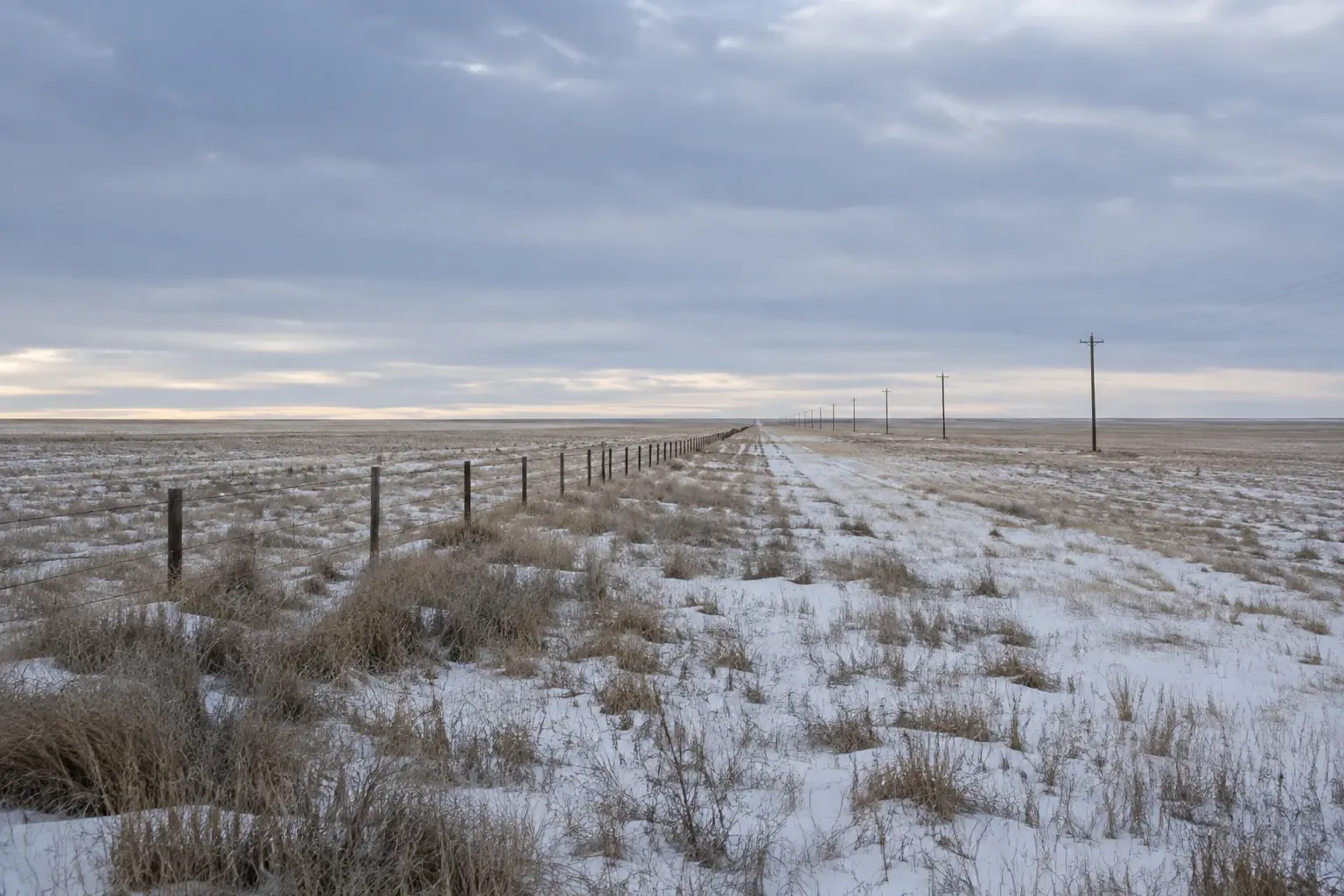
Linear utility corridors. Buried pipelines, electric transmission and distribution lines, fiber optics, and water and gas mains run for miles across land that continues to be used for agriculture, grazing, or other purposes. Easements let the project install and maintain the facility while the landowner keeps farming, ranching, or otherwise using the surface.
Underground installations on developed property. A fiber line under a residential street or a gas main behind a strip mall doesn't require ownership of the surface above it. An easement is cleaner, cheaper, and far less disruptive.
Access through one parcel to reach another. When a project needs to cross property A to reach property B, an access easement is the right tool. There's no reason to buy property A.
Temporary uses during construction. Staging, access, and adjacent work area needs are by definition temporary. Temporary construction easements price these uses correctly and end automatically.
Projects on cooperative private land. When a landowner is willing to host the facility but unwilling to sell, an easement is often the only path forward and frequently the right one.
The trade-off with easements is constraint. The easement document is the project's roadmap for everything it can do on that property forever. If it doesn't say you can do something, you can't — and adding rights later means going back to the landowner with a check.
How to value each
Both fee simple and easement values are determined through appraisal, and for federally-funded projects the appraisal must follow Uniform Act standards. The frameworks differ:
Fee simple appraisal estimates the market value of the property at its highest and best use. For partial takes — where only part of a parcel is acquired in fee — the appraisal also calculates damages or benefits to the remainder.
Easement appraisal estimates the value of the rights being acquired plus damages to the remainder. The methodology depends on the easement type and the impact on the underlying property:
For lightly-impacting easements (a buried fiber line in a road shoulder, for example), the value may be a small percentage of fee value — often 25-50%.
For heavy-impact easements that significantly restrict use of the surface (a permanent transmission corridor across cropland), the value can approach fee value, sometimes 75-95%.
Temporary easements are usually valued as a rental — the fair rental value of the area for the construction period — plus any specific damages.
Getting the valuation right is one of the most important things an experienced right-of-way acquisition firm does. Underpaying creates litigation risk; overpaying wastes project budget and sets bad precedent for future negotiations.
What good easement language looks like
If you're acquiring an easement, the document is the entire deal. Vague language haunts projects for decades. Strong easement documents address:
Permitted uses. Spell out exactly what facilities can be installed and maintained, what activities are authorized, and what isn't.
Width and depth. Define the easement area precisely — total width, depth for buried installations, and any vertical clearance for overhead lines.
Access. Address how the project will reach the easement area, including approved access routes and any gates, locks, or notice requirements.
Operations and maintenance rights. Specify ongoing rights to inspect, repair, replace, and (where appropriate) upgrade the installation.
Restoration obligations. Detail what restoration is required after construction or maintenance work — soil replacement, reseeding, fence repair, drainage restoration.
Reservations to the landowner. Explicitly preserve the landowner's right to continue grazing, farming, or other compatible uses of the surface.
Indemnification and liability. Allocate risk for incidents on the easement area.
Successors and assigns. Confirm that the easement runs with the land and binds future owners on both sides.
Skip any of these and you create exactly the kind of ambiguity that puts projects in court 15 years later.
How the fee-vs-easement call plays out across Colorado
Geography shapes this decision more than people expect. On the Front Range — Adams, Arapahoe, Douglas, Weld, Larimer, El Paso counties — projects often acquire fee for highway centerlines and detention ponds, with permanent easements for utility runs along agricultural land that's transitioning toward suburban development. The difference between a 50-foot and 75-foot easement matters intensely to a Weld County corn farmer; it barely registers on a Douglas County subdivision parcel.
On the Western Slope — Mesa, Garfield, Rio Blanco, Moffat, Montrose — mineral severances complicate every easement decision. A surface easement that looks clean on its face may sit on top of an active mineral lease that gives the operator priority access. Working through these interactions requires both title research deep enough to surface the conflict and a permitting and project management approach that coordinates with state and federal regulators.
In the Denver Metro and other urban environments, fee acquisitions often involve Uniform Act relocation when residences or businesses are displaced. That can shift the calculus toward easements wherever the project's needs allow — both to reduce cost and to avoid the compliance overhead of full URA-track displacement.
A real-world example
Consider a 12-mile natural gas gathering line crossing 28 parcels in northeastern Colorado. The project team has options on every parcel:
For the compressor station site, the project acquires fee simple — 4.5 acres at the end of the line, full ownership, exclusive use.
For the linear corridor, the project acquires permanent easements at 50 feet wide — enough for the pipeline, ongoing maintenance access, and a buffer for safe operations. Surface use stays with the landowner; cropland keeps being cropland.
Alongside the permanent easement, the project acquires temporary construction easements at an additional 50 feet for the duration of construction — staging room, equipment access, and a place for spoils during the trench-and-bury work.
Three parcels have unusual conditions — center pivots that would be permanently impacted, structures within the corridor — and the project negotiates either widened easements with damage payments or, in two cases, total fee takes because the remainder would be unusable.
That mix is typical. Most corridor projects aren't fee or easement. They're fee where the project needs ownership, permanent easement where it needs defined rights, and temporary easement where it needs short-term access — all built around what each parcel actually requires.
Frequently asked questions
Is an easement cheaper than buying property?
Almost always, yes — but not always by as much as people expect. A heavy-impact permanent easement on a small parcel can approach fee value. The right comparison is total cost of ownership: fee gives you everything but costs more upfront and adds maintenance and tax burden; easement is cheaper upfront but limits future use.
Can an easement be terminated?
Permanent easements don't terminate automatically. They can be released (by recorded document) if the project owner no longer needs the rights, abandoned in some jurisdictions through prolonged non-use, or extinguished by court action. Most don't go anywhere on their own.
Can a landowner build over a buried easement?
It depends on the easement language. Most utility easements prohibit permanent structures within the easement area to protect access for maintenance. Fences, landscaping, and gravel drives are usually fine; foundations, walls, and pools usually aren't.
Who pays for damage to crops or fences during construction?
The project owner. These damages are typically covered through the easement document and either built into the easement payment or paid separately at construction time, depending on how the easement is structured.
Does a permanent easement affect the property's salability?
It can, modestly. Most utility easements have minimal impact on residential property values; significant easements on agricultural land can affect price more meaningfully. Disclosure rules require the easement to appear in title work, so buyers know what they're getting.
Can the project later expand the easement?
Only if the original easement document permits it, or if the project negotiates an expanded easement with the landowner and pays for the additional rights. This is one reason careful drafting upfront matters so much.
Get the property interest right from the start
The fee-vs-easement decision is one of the highest-leverage choices in any infrastructure project. It drives acquisition cost, defines operational flexibility for decades, and shapes the project's relationship with the people whose land it crosses.
Western States Land Services helps clients make these decisions with clear-eyed analysis grounded in 45+ years of right-of-way experience across Colorado and the Mountain West. We work with engineering teams to identify what the project actually needs, value the alternatives accurately, and acquire the right property interest the first time.
For more on the broader process, see our complete guide to right-of-way acquisition or seven best practices for negotiating right-of-way easements. With offices in Loveland and Grand Junction, we cover both the Front Range and the Western Slope without an out-of-state firm's learning curve. When you're ready to talk through your project, get in touch.


Frequently Asked Questions
Have questions about our sustainability initiatives, eco-friendly practices, or how you can make a positive impact?
Western States Land Services is headquartered in Loveland, Colorado. We primarily serve Colorado, Wyoming, Nebraska, Kansas, New Mexico, Utah, and Texas, with experience working on projects across the broader Mountain West.
Western States Land Services was founded in 1981. The firm has been providing right-of-way acquisition, relocation, and permitting services in Colorado and the Mountain West for more than 45 years. Our team carries more than 150 years of combined industry experience.
Yes. Western States Land Services is prequalified with the Colorado Department of Transportation (CDOT) for right-of-way services. The firm is also experienced in FHWA requirements and fully compliant with the Uniform Relocation Assistance and Real Property Acquisitions Policies Act for federally regulated projects.
We serve public agencies, municipal governments, state departments of transportation, investor-owned utilities, oil and gas companies, pipeline operators, and private infrastructure developers. We have delivered right-of-way services across every sector — from CDOT highway corridors and utility transmission lines to rural pipeline routes and municipal capital improvement projects.
We offer the staffing capacity of a large firm with the direct access and personal accountability of a specialized boutique. Clients work with senior leadership — not a call center. Our agents meet landowners face-to-face. Our regulatory knowledge is deep rather than generalized. We have never needed to ramp up on Colorado or Mountain West rules. We have been working inside them for over 40 years.
Yes. Western States Land Services has experience supporting eminent domain proceedings, including preparing waiver valuations, providing expert witness testimony, and coordinating with legal counsel throughout the condemnation process. Our team has worked alongside attorneys on both agency-initiated and privately sponsored condemnation actions across Colorado.
