

How to Negotiate a Right-of-Way Easement: 7 Best Practices That Keep Projects On Schedule
Practical, field-tested best practices for negotiating right-of-way easements with private landowners — how to prepare, communicate, and close deals that hold up across the life of the project.
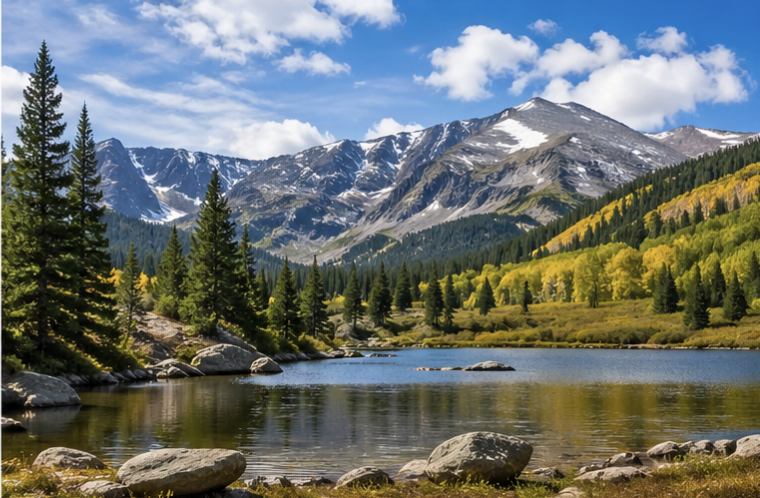
A right-of-way agent walks onto a property for the first time carrying a folder, a check, and a problem nobody asked the landowner to solve. How that conversation goes — not the offer amount, not the project's eminent domain authority, not the legal department's deadline — usually determines whether the parcel closes in six weeks or six months.
Right-of-way easement negotiation is one of the most consequential and least understood pieces of infrastructure work. It's not a haggle. It's not a sales pitch. It's a structured conversation between two parties who both have something the other needs, conducted under federal and state law, with permanent consequences.
Here are seven practices that experienced ROW teams use to negotiate easements that close on time and hold up over the life of the project.
1. Do your homework before you ever knock on the door
The single biggest predictor of a smooth negotiation is preparation. Walking up to a landowner's house with incomplete information is how negotiations stall and how trust evaporates.
Before the first contact, your team should have:
A current title report identifying the legal owner of record and any other parties with an interest in the property. If the property is held in a trust, an LLC, or by multiple heirs, you need to know that before you make an offer to the wrong person. Title research and due diligence is the foundation of every clean acquisition.
A clear picture of the easement footprint, including survey or accurate engineering plans showing exactly where the easement will go and what the construction footprint will look like.
A completed appraisal that establishes fair market value for the rights being acquired and any damages to the remainder.
Background on the property's use — is it cropland, grazing, residential, commercial, idle? Is there an active operator? Are there structures, irrigation, fencing, or access roads near the proposed easement?
A working knowledge of the project schedule and the constraints driving it.
When the agent shows up prepared, the landowner sees a professional handling something complicated with care. When the agent shows up half-prepared, the landowner sees somebody trying to hustle them.
2. Lead with the project, not the offer
Nobody likes feeling like a transaction. The first conversation should be about the project — what it is, why it matters, what the construction will look like, and how the company plans to be a good neighbor through it. The offer comes after that, not before.
This isn't a sales technique. It reflects how landowners actually decide. By the time you're discussing dollars, the landowner has formed an opinion of the project, the company, and the agent in front of them. Lead with substance and that opinion is usually positive. Lead with the check and you've started the relationship as a transaction, which is fine for some people and an instant red flag for others.
Specific things to cover in that first conversation:
What the project is and what public or operational need it serves.
The project's footprint on this property — where the easement runs, how wide it is, what the construction zone will look like, when the work will happen.
How operations will affect everyday use of the land — access routes, fence cuts, drainage, gates, and timing around farming or ranching cycles.
Restoration commitments — what the property will look like after construction is complete.
Who's responsible for what, ongoing — maintenance, fencing, weed control, drainage, access management.
A realistic timeline from this conversation to closing.
By the time you turn to the offer, the landowner is choosing how to engage on a project they understand, not reacting to a stranger waving paperwork.
3. Listen for the real issue
Almost every negotiation has a stated objection and a real one. The stated objection is usually about money. The real one is often something else — concerns about livestock, irrigation, drainage, neighbors, the next generation's plans for the property, a bad experience with another company ten years ago, or simply a feeling of not being respected.
Experienced ROW agents listen for the real issue. Sometimes it surfaces immediately. Sometimes it takes three meetings. Once you know what's actually driving the resistance, you can usually address it directly — often without raising the offer amount at all.
Common real issues that show up in ROW negotiation:
Concern about access during calving, harvest, or other seasonal operations — addressed through scheduling commitments and clearly defined access protocols.
Worry about long-term liability or operations — addressed by walking through the easement document and the company's track record on similar corridors.
Frustration that the project route ignores a more sensible alternative — addressed (where possible) by working with engineering to consider alignment changes, or (where not) by explaining why the alignment is what it is.
Family dynamics — multiple owners with different interests in the property, or a generational handoff in progress — addressed by patience, transparency, and getting all the right people in the same conversation.
Past bad experiences with project teams — addressed by being demonstrably different, every time.
The agents who can hear the real issue are the agents who close hard parcels.
4. Negotiate the easement document, not just the price
Most landowners focus on the dollar amount. Smart agents make sure they also focus on the easement document, because the document is what actually governs the relationship for the next several decades.
A few specific levers tend to matter more than money in landowner conversations:
Width. A 50-foot easement and a 75-foot easement are very different things to a farmer with a center pivot or a rancher running cattle. Where the project can flex on width, that flexibility is often more valuable to the landowner than an extra $5,000 in payment.
Access routes. Specifying exactly where the project will enter and exit, and how, often resolves landowner concerns about gates, fencing, and disruption of operations.
Restoration commitments. Specific, written restoration obligations — soil depth, reseeding standards, fence type and replacement, drainage restoration — give landowners confidence about what their property will look like after construction.
Timing and notice. Commitments around when construction will occur and how much notice the landowner gets are inexpensive for the project and significant for landowners with active operations.
Reservations. Explicit preservation of the landowner's continuing right to graze, farm, or otherwise use the surface for compatible purposes.
A good easement is good for both sides. It protects the project's operational rights and respects what the landowner needs to keep doing on the land.
5. Document everything, but communicate like a person
Federal compliance — particularly under the Uniform Act for federally-funded projects — requires extensive documentation. Every offer in writing. Every conversation logged. Every decision and rationale captured for the file.
That's necessary. It's also a trap if you let the documentation drive the relationship.
The agents who do this well keep meticulous files and communicate like normal people. Phone calls, in-person meetings, letters that read like letters and not legal documents. Texts and emails for routine coordination. The formal paperwork comes when it has to come, but the relationship runs on regular human contact.
The single most common failure mode in ROW negotiation is letting weeks go by without contact. Landowners imagine the worst when they don't hear from the project. A quick call to say "we're still working on the alignment, here's where things stand" buys enormous goodwill at zero cost.
6. Know when to bring in specialists
ROW agents handle most negotiations. Some parcels need more.
When a property has unusual title issues — heirship problems, severed mineral rights, missing chain of title — bring in title and legal specialists early. Trying to negotiate around a title problem is how projects buy from the wrong owner.
When negotiations involve significant business operations — an active commercial property, a farm with displacement implications, a residence subject to relocation — bring in Uniform Act-compliant relocation specialists. The rules are detailed and the consequences of getting them wrong are real.
When environmental, archaeological, or cultural resource issues appear, bring in the relevant consultants. ROW agents shouldn't be making representations about NEPA compliance, Section 106 obligations, or species protection on the fly.
When the negotiation is heading toward condemnation, bring in counsel before you cross the line from negotiation into pre-litigation posture. The transition has to be clean.
A good ROW firm has the bench to bring in specialists when needed and the judgment to know when that moment has arrived.
7. Make condemnation the last move, not the first
Eminent domain exists for good reason. Some negotiations genuinely cannot be resolved, and the law correctly recognizes that public-benefit projects shouldn't be held hostage. But experienced teams reach for condemnation only when they have to.
Condemnation is expensive, slow, and adversarial. It also damages the project's reputation in the community — and in the broader region where the same firm will be doing more work for years. A reputation for litigating with landowners precedes you to the next parcel, the next county, and the next project.
The threshold for moving to condemnation should be clear and high:
Genuine, documented effort to negotiate over a reasonable period.
A specific impasse that isn't resolvable through further negotiation — not just a final dollar gap, but a structural disagreement about the project, the rights, or the value.
Schedule pressure that legitimately requires the parcel to be in hand.
Counsel's review and the project's authorization.
Even within a condemnation track, the door to negotiated settlement should stay open. Many parcels that file as condemnation cases settle at the courthouse steps. The relationship and the language matter even when the proceeding is formal.
What good ROW negotiation looks like in practice
Pull back to the project level: a healthy ROW program looks like this.
The team meets every landowner face-to-face before any offer is made.
Offers are based on completed appraisals, follow Uniform Act standards where applicable, and are explained in plain language.
The vast majority of parcels — usually 95% or more — close through voluntary negotiation.
Closing timelines are predictable and tracked, with realistic averages and clear identification of parcels that need extra time.
Documentation is complete and audit-ready, but the working relationship feels human, not legalistic.
When condemnation is necessary, it's a small minority of cases, handled cleanly, and not used as a shortcut around hard work.
Landowners — even the ones who didn't get everything they wanted — leave the process feeling like they were treated fairly.
That last point matters more than people think. The ROW industry is small. Counties are small. Landowners talk to each other, to county commissioners, to local press. A reputation for honest, respectful negotiation compounds over decades. So does its opposite.
Frequently asked questions
How long does an easement negotiation typically take?
Routine parcels with willing sellers and clean title close in 60 to 90 days from initial contact to closing. Complex parcels with title issues, multiple owners, or significant operational concerns can take six months or more. Severely contested parcels that head toward condemnation can take a year or longer.
Do landowners need their own attorney?
Most landowners don't, but they can. For large or complex negotiations, having counsel is often a good idea, and federal projects under the Uniform Act may reimburse a portion of professional fees. Project teams should never discourage landowners from getting their own advice.
What if the landowner wants more than the appraised value?
It depends on whether the additional ask reflects something the appraisal missed (specific damages, unique property characteristics, business considerations) or simply a desire to negotiate beyond market value. Federally-funded projects have constraints on paying above appraised value without specific justification.
Can I negotiate the easement language, or is it a take-it-or-leave-it document?
Easement language is almost always negotiable, within the constraints of the project's operational needs. Width, access routes, restoration commitments, and reservations are commonly adjusted in negotiation.
What happens if the landowner refuses to sign?
For projects with eminent domain authority, the project can ultimately move to condemnation. For projects without that authority, the parties either find a deal or the project finds another route. Either way, condemnation is rare relative to negotiated settlement.
Will my taxes go up after granting an easement?
Usually not. Granting an easement may reduce assessed value for the affected portion of the property, depending on the jurisdiction. Tax treatment of easement payments varies — some are treated as a return of capital, some as ordinary income, depending on the facts. Talk to a tax professional.
How Colorado geography shapes negotiation
Colorado isn't one negotiating environment. The cultures, expectations, and pace of conversation are different on the Front Range than on the Western Slope, and different again in the Eastern Plains and the high country.
On the Front Range — Larimer, Weld, Boulder, Adams, Arapahoe, Denver, Douglas, El Paso counties — landowners often live near the corridor and may be sophisticated about utility and DOT processes from prior projects. Engineering specifics, schedule clarity, and recognizable Colorado-firm credentials carry weight.
On the Western Slope — Mesa, Garfield, Rio Blanco, Moffat, Montrose, Delta — many landowners are multi-generational ranchers and farmers whose families have worked the same ground since territorial days. Negotiations move at a different cadence. Time on the kitchen table is part of the work, and an out-of-state agent who flies in for a day rarely gets the same result an agent based in Grand Junction gets.
In the Eastern Plains and mountain counties, communication often runs through county extension offices, local water boards, and conservation districts as much as through the deed records. Knowing those relationships is part of the job.
A firm that works across all of these environments — with offices in both Loveland and Grand Junction — has an advantage that a single-region firm doesn't.
Build a project on relationships, not just rights
The right ROW partner doesn't just close parcels. They build the kind of trust that lets a project move through a community without leaving wreckage behind it.
Western States Land Services has spent more than four decades acquiring right-of-way for utilities, transportation, pipelines, and municipal projects across Colorado and the Mountain West. We also handle title research, permitting, and Uniform Act relocation assistance — so a single team can carry the project through every step. Our agents meet with landowners face-to-face, negotiate in good faith, and close more than 95% of parcels through voluntary agreement.
If you're staffing up a corridor, restarting a stalled project, or just want a candid read on what's reasonable, get in touch.
Frequently Asked Questions
Have questions about our sustainability initiatives, eco-friendly practices, or how you can make a positive impact?
Western States Land Services is headquartered in Loveland, Colorado. We primarily serve Colorado, Wyoming, Nebraska, Kansas, New Mexico, Utah, and Texas, with experience working on projects across the broader Mountain West.
Western States Land Services was founded in 1981. The firm has been providing right-of-way acquisition, relocation, and permitting services in Colorado and the Mountain West for more than 45 years. Our team carries more than 150 years of combined industry experience.
Yes. Western States Land Services is prequalified with the Colorado Department of Transportation (CDOT) for right-of-way services. The firm is also experienced in FHWA requirements and fully compliant with the Uniform Relocation Assistance and Real Property Acquisitions Policies Act for federally regulated projects.
We serve public agencies, municipal governments, state departments of transportation, investor-owned utilities, oil and gas companies, pipeline operators, and private infrastructure developers. We have delivered right-of-way services across every sector — from CDOT highway corridors and utility transmission lines to rural pipeline routes and municipal capital improvement projects.
We offer the staffing capacity of a large firm with the direct access and personal accountability of a specialized boutique. Clients work with senior leadership — not a call center. Our agents meet landowners face-to-face. Our regulatory knowledge is deep rather than generalized. We have never needed to ramp up on Colorado or Mountain West rules. We have been working inside them for over 40 years.
Yes. Western States Land Services has experience supporting eminent domain proceedings, including preparing waiver valuations, providing expert witness testimony, and coordinating with legal counsel throughout the condemnation process. Our team has worked alongside attorneys on both agency-initiated and privately sponsored condemnation actions across Colorado.
