

Does a Utility Need Permits Before Eminent Domain in Colorado?
A 2026 bill would have made utilities secure local approvals before using eminent domain in Colorado. It died in committee, so here's what the law actually requires today.
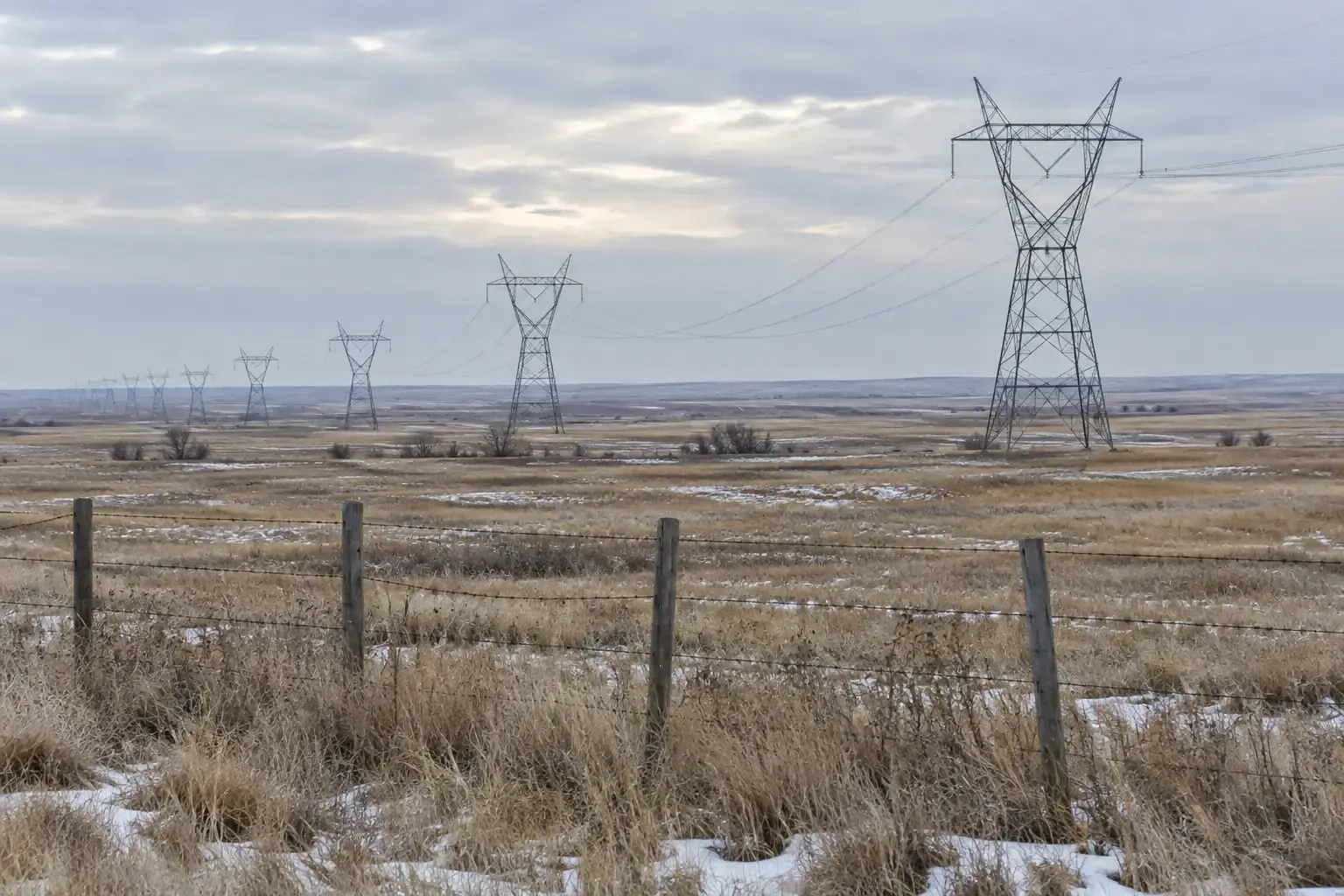
A utility does not need your county’s blessing before it can take you to court over your land. That catches most landowners off guard, and in 2026 it caught the Colorado legislature’s attention too, after a dispute over a major transmission project raised a question that sits at the center of right-of-way work across the state: does a utility need permits and local land use approval before it can use eminent domain in Colorado? A bill meant to answer that question with a firm yes was introduced, debated, and ultimately set aside. Here is what actually happened, what the law requires today, and what agencies, utilities, project managers, and landowners should take from it.
Quick Summary
What Triggered Colorado’s 2026 Eminent Domain Debate
The story behind HB26-1278 starts with Colorado’s Power Pathway, a roughly 550-mile, $1.7 billion high-voltage transmission project built by Xcel Energy to connect the Eastern Plains to the Denver metro area. Construction began in 2023, and like most large transmission corridors, it required easements and acquisitions across a long list of parcels in multiple counties.
In Elbert and El Paso counties, commissioners denied permits covering nearly 100 miles of proposed towers, finding that the applications did not meet the counties’ approval criteria. Xcel responded on two fronts. It sued Elbert County in district court, and it appealed the permit denial to the Colorado Public Utilities Commission. Then, before the county had even completed a hearing on the underlying land use application, Xcel filed eminent domain proceedings against more than a dozen Elbert County property owners along the route.
Residents objected for a mix of reasons. The route crossed private agricultural land and the Bijou Basin, habitat for protected species, and nearby landowners worried about falling property values and a process that felt backward. As one state representative later put it, the complaint from constituents was straightforward: the project hadn’t even been approved yet, but the condemnation paperwork had already arrived.
What HB26-1278 Would Have Changed
In response, Representative Chris Richardson, along with Senators Marc Snyder and Rod Pelton, introduced House Bill 26-1278, titled “Local Government Approval of Transmission Infrastructure.” The bill was introduced on February 19, 2026, and it was not retroactive, meaning it would not have unwound anything already filed.
The core idea was sequencing. HB26-1278 would have barred a utility from starting eminent domain proceedings for transmission infrastructure until it had both a certificate of public convenience and necessity from the Public Utilities Commission and all required local land use approvals and permits in hand. In plain terms: get your approvals first, then condemn if you still need to. Not the other way around.
Quick Answer: Does a Utility Need Permits Before Eminent Domain in Colorado?
No, not under current Colorado law. A utility or other entity with statutory condemnation authority can generally begin eminent domain proceedings for a project before all local land use approvals and permits are finalized. A 2026 bill that would have required permits and a Public Utilities Commission certificate first, HB26-1278, was postponed indefinitely in committee and did not pass, so the sequencing rule it proposed never took effect.
What Actually Happened to the Bill
HB26-1278 was heard by the House Energy and Environment Committee on March 5, 2026. The committee voted 7 to 4, with two members excused, to postpone the bill indefinitely. In legislative terms, that motion is the standard way a committee sets a bill aside without sending it to the House floor. The bill did not advance, did not receive a final vote by the full legislature, and is not part of Colorado law today.
That outcome matters for anyone planning a transmission, pipeline, or utility corridor project in Colorado right now. The rule the bill proposed, approvals before condemnation, is not the law. The permitting and condemnation tracks remain separate, exactly as they were before the Power Pathway dispute made headlines.
How Eminent Domain Actually Works in Colorado Today
Which Entities Hold Condemnation Authority in Colorado
Eminent domain authority in Colorado belongs to governments by default, but the legislature has extended it by statute to a range of other entities that build infrastructure the public relies on. Depending on the project type, that can include:
Having condemnation authority is not the same as having a finished project. Most of these entities still need a long list of federal, state, and local permits. The Power Pathway dispute is really a story about what happens when those two requirements, condemnation authority and permitting completion, get out of step with each other.
How a Colorado Condemnation Case Typically Moves Forward
Colorado’s eminent domain procedure is set out in C.R.S. Title 38, Article 1. While the details vary by project and by the authority involved, a typical condemnation generally follows this sequence:
Nothing in that sequence requires the condemning authority to first resolve every local land use question. That is precisely the gap HB26-1278 tried, and failed, to close.
Just Compensation and Landowner Rights
Whatever else changes, one protection does not move: the Fifth Amendment’s guarantee that private property will not be taken for public use without just compensation. A landowner facing condemnation in Colorado retains the right to an independent appraisal, the right to negotiate, and the right to contest both the public-use determination and the compensation amount in court. None of that depends on whether the underlying project has finished its permitting process.
Practical Takeaways for Agencies, Utilities, and Project Teams
Legally available and strategically wise are two different things. Even where current law allows a condemnation filing to run ahead of local permitting, the Power Pathway dispute is a useful case study in what that choice can cost. A filing that lands before a county has finished its own review reads, to the public and to legislators, as an agency skipping the line. That perception produced a bill in a matter of months.
In our experience, project teams that keep acquisition and permitting timelines aligned, and that lean on early, transparent landowner outreach rather than treating condemnation as a first option, tend to avoid that kind of backlash. Done well, right-of-way work disappears into the project schedule. Done out of sequence, it can end up in front of a legislative committee. Our agents build acquisition schedules around that reality, not around the assumption that condemnation is always available on day one.
What This Means for Landowners
If a project crosses your property, a pending local permit dispute, or even a denied permit, is not a guarantee that a condemnation filing will wait. The two processes can and sometimes do move at the same time. If you receive a written offer or a condemnation notice, it is worth having an independent appraisal and talking with a qualified attorney about your specific situation before you sign anything or let a deadline pass. General information like this post is not a substitute for advice tailored to your parcel, your project, and your timeline.
Who Can Use Eminent Domain in Colorado: A Quick Reference
Entity TypeTypical Project TypesCommon Added Permitting LayerState and local transportation agenciesHighway and road expansionFederal-aid compliance, local land useMunicipalities and special districtsWater, sewer, drainageLocal land use, state water rights reviewElectric and gas utilitiesTransmission and distribution linesPublic Utilities Commission review, local land usePipeline companiesOil, gas, and water pipelinesFERC and/or USACE nationwide permits
The Bottom Line
Conclusion
The 2026 legislative session asked a fair question: should a utility have to finish its permits before it can start condemning land? Lawmakers answered, in effect, not yet. HB26-1278 did not pass, and the permitting and condemnation tracks in Colorado remain as separate today as they were before the Power Pathway dispute. For agencies and utilities, the practical lesson is to treat that separation as a risk to manage, not a shortcut to take. For landowners, it means a stalled permit is not the same as a stalled project, and getting informed early matters. Our team works with agencies, utilities, and landowners across Colorado on exactly these questions, and we are glad to start a conversation about your project, with no obligation and no agenda.
Frequently Asked Questions
Does a utility need a permit before it can use eminent domain in Colorado?
Generally, no. Under current Colorado law, a utility or other entity with statutory condemnation authority can typically begin eminent domain proceedings before all local land use approvals and permits are finalized. A 2026 bill that would have changed that, HB26-1278, did not pass.
What is HB26-1278 and did it become law?
HB26-1278, “Local Government Approval of Transmission Infrastructure,” was a 2026 bill that would have required utilities to obtain a Public Utilities Commission certificate of public convenience and necessity and all required local land use approvals before starting eminent domain for transmission infrastructure. A House committee voted to postpone it indefinitely in March 2026, so it did not become law.
What is a certificate of public convenience and necessity, and why does it matter here?
A certificate of public convenience and necessity, often called a CPCN, is the Colorado Public Utilities Commission’s approval that a proposed utility project is actually needed and in the public interest. HB26-1278 would have required a utility to hold this certificate, along with local land use approvals, before it could start eminent domain for transmission infrastructure. Because the bill did not pass, holding a CPCN is not currently a legal precondition for filing condemnation.
Can a county’s denial of a land use permit stop a utility from using eminent domain?
Not automatically. A local permit denial can be appealed or litigated on its own track, but it does not, by itself, block a separate eminent domain filing under current Colorado law. That is exactly the gap HB26-1278 was written to address, and it did not pass.
What should a landowner do if they receive a condemnation notice during an active permitting dispute?
Treat the condemnation notice as its own deadline, separate from whatever is happening with local permits. Get an independent appraisal, review the written offer carefully, and talk with a qualified attorney about your specific situation before responding or letting a deadline pass.
Frequently Asked Questions
Have questions about our sustainability initiatives, eco-friendly practices, or how you can make a positive impact?
Western States Land Services is headquartered in Loveland, Colorado. We primarily serve Colorado, Wyoming, Nebraska, Kansas, New Mexico, Utah, and Texas, with experience working on projects across the broader Mountain West.
Western States Land Services was founded in 1981. The firm has been providing right-of-way acquisition, relocation, and permitting services in Colorado and the Mountain West for more than 45 years. Our team carries more than 150 years of combined industry experience.
Yes. Western States Land Services is prequalified with the Colorado Department of Transportation (CDOT) for right-of-way services. The firm is also experienced in FHWA requirements and fully compliant with the Uniform Relocation Assistance and Real Property Acquisitions Policies Act for federally regulated projects.
We serve public agencies, municipal governments, state departments of transportation, investor-owned utilities, oil and gas companies, pipeline operators, and private infrastructure developers. We have delivered right-of-way services across every sector — from CDOT highway corridors and utility transmission lines to rural pipeline routes and municipal capital improvement projects.
We offer the staffing capacity of a large firm with the direct access and personal accountability of a specialized boutique. Clients work with senior leadership — not a call center. Our agents meet landowners face-to-face. Our regulatory knowledge is deep rather than generalized. We have never needed to ramp up on Colorado or Mountain West rules. We have been working inside them for over 40 years.
Yes. Western States Land Services has experience supporting eminent domain proceedings, including preparing waiver valuations, providing expert witness testimony, and coordinating with legal counsel throughout the condemnation process. Our team has worked alongside attorneys on both agency-initiated and privately sponsored condemnation actions across Colorado.
