

Can Transmission Lines Share Colorado's Highway Right-of-Way Now?
Colorado's new co-location law lets utilities run transmission lines through state highway right-of-way. Here's how the process works and what it means for ROW planning, permitting, and land acquisition.
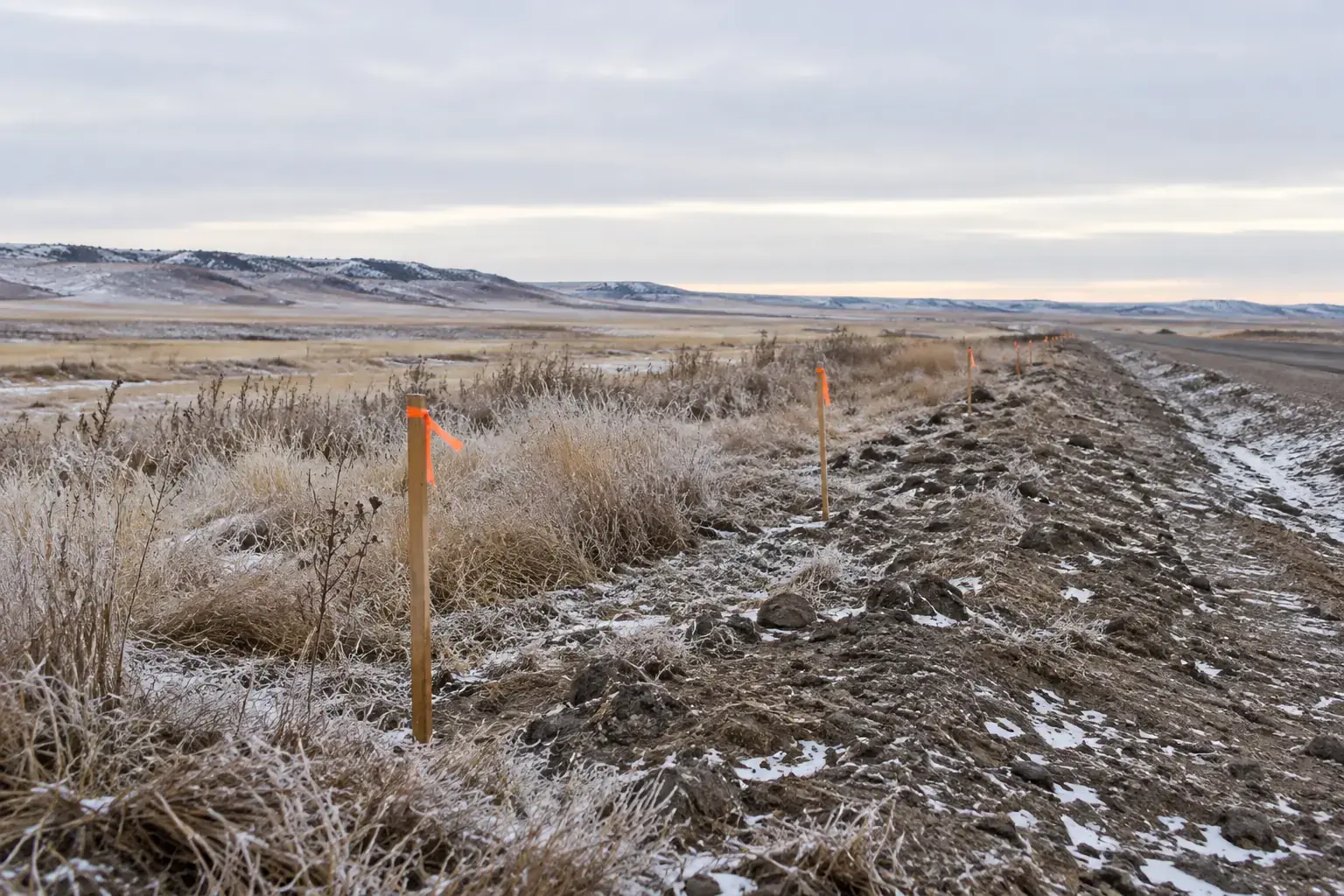
Highway right-of-way used to mean one thing: pavement, drainage, and the graded strip of land that keeps the road a road. Colorado just redefined it. Under a new state law, that same strip can now carry something it was never built for: high-voltage transmission lines. For utilities racing to expand the grid and for the agencies and landowners whose property sits next to a state highway, that is a real change, not a footnote. At Western States Land Services, we track changes like this closely because they reshape how right-of-way strategy gets built from the start. This article explains what House Bill 25-1292 does, how the new co-location process works, and what it means for right-of-way planning, permitting, and land acquisition across Colorado.
Quick Summary
Can Transmission Lines Use Highway Right-of-Way in Colorado?
Yes. As of 2025, Colorado law allows a transmission developer to co-locate high-voltage lines longitudinally within a state highway right-of-way, provided the developer follows a process CDOT establishes by rule, agrees to compensate the department, and meets the law's siting, reporting, and consent requirements. The line still has to clear CDOT's constructability, access, and maintenance review before anything goes in the ground.
What House Bill 25-1292 Actually Changed
Before this law, a transmission developer that wanted to run a line near a state highway typically had to acquire a separate, parallel corridor of private easements or fee land, often adjacent to CDOT's own right-of-way rather than inside it. HB25-1292 opened a second path. It lets CDOT and a developer agree that a stretch of highway right-of-way may be suitable for co-location, then work through a defined process instead of starting a land acquisition campaign from scratch.
The bill became law on May 9, 2025 (2025 Colo. Sess. Laws, ch. 175), with most provisions effective August 6, 2025. It does not force CDOT or a developer into co-location. It gives them a legal framework to use it when it makes sense, and it builds in guardrails so the highway system, adjacent property owners, and the public interest stay protected along the way.
How the CDOT Co-Location Process Works
The law lays out a sequence rather than a single approval. In practice, it typically runs like this:
Notably, developers are not required to choose an existing utility corridor or right-of-way. The law simply requires that they consider those options, in that order, before turning to a new corridor.
Why Colorado Opened Its Highways to Transmission Developers
Colorado's electric grid is expanding to keep pace with new generation, growing demand, and the practical reality that building an entirely new transmission corridor from scratch is often slow and contested. Existing highway rights-of-way are already cleared, already surveyed, and already under public ownership. For the right project, co-locating inside that corridor can shorten the siting timeline considerably compared with assembling a brand-new private easement corridor parcel by parcel. That is the trade lawmakers were weighing: faster grid buildout against the added complexity of sharing a working highway corridor with high-voltage infrastructure.
What This Means for Utilities and Transmission Developers
For a utility or independent transmission developer, this law adds a tool to the siting toolbox. It does not replace the fundamentals. A developer still needs to budget time for CDOT's constructability and access review, still needs to negotiate compensation terms, and still needs a credible route-selection analysis ready for public posting once the 2027 reporting requirement kicks in. Developers planning a 2026 or 2027 filing should treat that reporting deadline as a real planning constraint, not a distant formality.
Co-location also does not eliminate the need for conventional right-of-way work. Substations, interconnection facilities, maintenance access points, and any segment of the route that leaves the highway corridor still require their own easements, permits, and, where applicable, acquisition from private landowners.
What This Means for Public Agencies and Project Managers
For CDOT itself and for the local governments that issue permits along these corridors, the law adds a new category of request to manage: a utility asking to share, rather than cross, the right-of-way. Project managers coordinating state or local infrastructure work near a highway corridor should build in time to check whether a co-location agreement affects construction staging, maintenance access, or future widening plans. A transmission line sharing the corridor is not an obstacle by itself, but it is one more constraint to design around.
What This Means for Landowners Along Highway Corridors
If you own property that borders a state highway, co-location inside the existing right-of-way generally means the transmission line stays within land CDOT already controls, rather than requiring a new easement across your parcel. That said, co-location does not guarantee your property is unaffected. Access points, interconnection facilities, or a short connector segment to reach a substation can still require acquisition from adjacent private land. If a developer or agency contacts you about a potential easement near a co-located line, it is worth confirming exactly which portion of the project needs your property and which portion stays inside the existing highway corridor.
Co-Location vs. Traditional Right-of-Way Acquisition
The table below summarizes how co-location under HB25-1292 compares with a conventional transmission right-of-way acquisition project.
FactorCo-Location in Highway Right-of-WayTraditional ROW AcquisitionLand ownershipRemains with CDOT; developer gains a use agreementAcquired as easement or fee from private landownersSiting priorityExisting corridors and rights-of-way considered firstDriven by engineering and least-cost routing studiesCompensationPaid to CDOT via partnership or surchargePaid to individual landowners as just compensationPublic reportingRequired starting January 1, 2027, for local permitsVaries by project and funding sourceTypical use caseLinear segments that parallel an existing highwayAny route, including segments off the highway system
Key Dates and Compliance Deadlines to Track
How This Fits Into Your Right-of-Way Strategy
Done well, co-location is simply another option on the table when a transmission route runs near a state highway. Done without a clear picture of what it does and does not cover, it can create a false sense that the right-of-way work is finished when only part of it is. A thorough right-of-way strategy still accounts for title research on the segments that leave the highway corridor, easement negotiation for substations and access points, and permitting coordination across every agency with a stake in the route. Co-location changes where some of that work happens. It does not remove the need for it.
Frequently Asked Questions
Can a utility put a transmission line in Colorado highway right-of-way without buying private land?
For the segment that runs inside the state highway right-of-way, often yes, under the process HB25-1292 created. Segments that leave the highway corridor, such as connections to a substation, typically still require separate easement or fee acquisition from private landowners.
What is House Bill 25-1292?
It is a 2025 Colorado law that lets transmission developers co-locate high-voltage lines inside state highway rights-of-way through a process CDOT develops by rule. It was signed on May 9, 2025, with most provisions effective August 6, 2025.
Does CDOT charge utilities to use highway right-of-way for transmission lines?
Yes. The law requires developers to compensate CDOT for co-location, structured either through a public-private partnership or through surcharges the department sets by rule.
Does this new law affect right-of-way acquisition for landowners near a highway?
It can reduce the need for a new easement across land directly inside the highway corridor, but it typically does not affect acquisition needed for substations, interconnection points, or segments of a project that fall outside the highway right-of-way.
When do the new reporting requirements for transmission co-location take effect?
Starting January 1, 2027, a developer filing for a local permit must publish a public report on its route-selection analysis within 30 days of that filing.
Colorado's highway corridors are quickly becoming part of the conversation about where the state's next transmission lines go. If you are an agency, a utility, or a landowner trying to figure out how a project near a highway corridor affects your land, your permitting timeline, or your easement obligations, our team at Western States is glad to help you sort out what applies to your specific situation. Any individual legal question, particularly one involving eminent domain, compensation, or a specific parcel, is worth discussing with a qualified real estate attorney or with our right-of-way team directly. It is a conversation with no obligation and no agenda, just a clearer picture of where your project stands.
Frequently Asked Questions
Have questions about our sustainability initiatives, eco-friendly practices, or how you can make a positive impact?
Western States Land Services is headquartered in Loveland, Colorado. We primarily serve Colorado, Wyoming, Nebraska, Kansas, New Mexico, Utah, and Texas, with experience working on projects across the broader Mountain West.
Western States Land Services was founded in 1981. The firm has been providing right-of-way acquisition, relocation, and permitting services in Colorado and the Mountain West for more than 45 years. Our team carries more than 150 years of combined industry experience.
Yes. Western States Land Services is prequalified with the Colorado Department of Transportation (CDOT) for right-of-way services. The firm is also experienced in FHWA requirements and fully compliant with the Uniform Relocation Assistance and Real Property Acquisitions Policies Act for federally regulated projects.
We serve public agencies, municipal governments, state departments of transportation, investor-owned utilities, oil and gas companies, pipeline operators, and private infrastructure developers. We have delivered right-of-way services across every sector — from CDOT highway corridors and utility transmission lines to rural pipeline routes and municipal capital improvement projects.
We offer the staffing capacity of a large firm with the direct access and personal accountability of a specialized boutique. Clients work with senior leadership — not a call center. Our agents meet landowners face-to-face. Our regulatory knowledge is deep rather than generalized. We have never needed to ramp up on Colorado or Mountain West rules. We have been working inside them for over 40 years.
Yes. Western States Land Services has experience supporting eminent domain proceedings, including preparing waiver valuations, providing expert witness testimony, and coordinating with legal counsel throughout the condemnation process. Our team has worked alongside attorneys on both agency-initiated and privately sponsored condemnation actions across Colorado.
