

Colorado's Data Center Boom: What It Means for Land and Easement Acquisition
Colorado's data center boom is often framed as a power problem. In reality, it's a land and easement acquisition challenge that utilities, municipalities, and landowners are only beginning to grapple with.
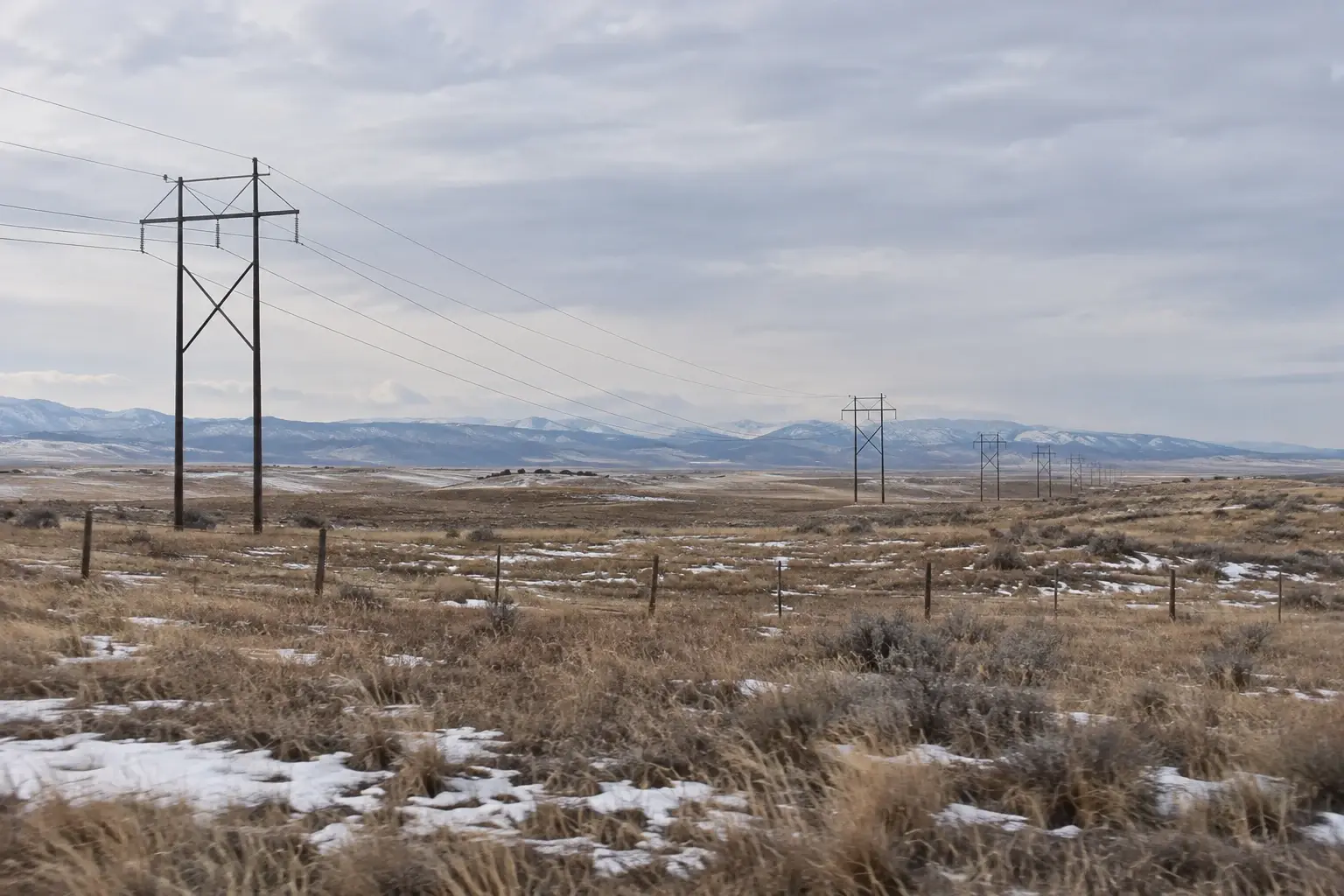
Everyone treats Colorado's data center boom as a power story. More megawatts, more substations, more strain on the grid. That framing misses what is actually slowing projects down.
Before a data center can draw a single watt from the grid, someone has to secure the land underneath it, the easements that carry power to it, and the right-of-way for every new line, cable route, and substation lead that connects it to Colorado's existing infrastructure. That work, acquiring the parcels, negotiating the easements, and researching the titles, now moves at a very different pace than the hyperscale construction schedules racing to keep up with it.
This post looks at what is driving Colorado's data center growth, where it is concentrated, and what it means for the land acquisition, easement, and permitting work that has to happen before a single transformer gets energized.
Quick Summary
What Is Causing Colorado's Data Center Boom?
Colorado's data center growth is being driven by hyperscale cloud and AI providers, who are reportedly planning tens of billions of dollars in 2026 capital spending nationwide, combined with the Front Range's existing fiber and power infrastructure, available land along the I-25 and I-76 corridors, and utility programs designed to attract large electric loads. The result is a wave of new campuses concentrated east and north of Denver.
Where Is Colorado's Data Center Growth Concentrated?
Colorado's data center market is not centered in one place. It is spreading across several counties, each handling the growth differently.
RegionWhat's HappeningWhy It Matters for Land and Right-of-WayWeld County (Greeley, Windsor area)Large-acreage land assemblies for proposed campuses, alongside county code updates in 2026 that define where data centers can locate, driven partly by drought and water concerns.Bigger assemblies mean more parcels, more owners, and more title work to clear before a project can move.Aurora and the Byers, Watkins, and Henderson corridorHyperscale campuses are clustering here because higher-voltage transmission corridors already exist in the area.Proximity to existing lines still typically requires new taps, substations, or short transmission extensions, each needing its own easement.Denver (including the Elyria-Swansea area)The city has paused new data center approvals while it develops updated rules, with a policy package expected in 2027.A development pause can delay a project's land and easement work even after a site is under control.Parker and Douglas CountyNew data center construction is underway, supported by local incentive packages.Incentives can speed permitting, but the underlying easement and right-of-way work still has to happen on its own timeline.Brighton and Adams CountyNew modular data center manufacturing and campus construction, along with ongoing enforcement actions against unauthorized construction elsewhere in the region.Enforcement activity is a reminder that land use and permitting approval has to precede, not follow, site work.Colorado SpringsNew local guardrails require developers to help cover infrastructure costs and address water and noise impacts before approval.Infrastructure cost-sharing requirements often tie directly to new easement and right-of-way needs for power delivery.Fort Collins, Loveland, and Northern ColoradoListed among the state's established data center markets, with continued interest from operators.Growth here adds to demand on the same CDOT-prequalified, regionally experienced right-of-way teams working the Front Range.
Why This Is a Land Problem, Not Just a Power Problem
A utility's interconnection queue position tells it when it can connect a new customer to the grid. It says nothing about whether the utility already owns, or has the right to use, the ground the new wires, poles, and substations need to cross. That gap is where right-of-way and land acquisition work lives.
Reported timelines for new large-load interconnection requests above 50 megawatts run well over two years from application to energization. Major transformers and switchgear can carry similarly long lead times. Land and easement acquisition has to happen inside that same window, often earlier, since a utility typically cannot finalize engineering for a line or substation until it knows the exact parcels it will cross.
Done early, this work barely shows up in a project's public timeline. Done late, it becomes the reason a fully funded, fully engineered project sits waiting on a single unresolved parcel.
The Right-of-Way Work Behind Every New Substation and Transmission Line
What Has to Happen Before Construction Starts
Acquiring land and easements for a new piece of power infrastructure typically follows a consistent sequence, whether the end customer is a data center, a subdivision, or a highway interchange.
Title Research and Due Diligence Matter More in a Fast-Moving Market
A fast-growing market tends to surface old problems. Parcels assembled quickly for a data center campus or a new substation often carry mineral severances, old irrigation or ditch easements, access disputes, or prior utility easements that were never fully released. Thorough title research and due diligence, done before a route or site is locked in, typically catches these issues while they are still cheap to fix. Skipping that step rarely saves time. It just moves the delay later in the project, when it costs more to resolve.
What a Closely Watched Colorado Case Shows About Getting It Right
A dispute working through the Colorado courts this year is a useful illustration, even though it involves a wind energy transmission line rather than a data center. A Colorado utility sought to condemn a roughly 550-foot easement from a landowner to connect a wind project to the grid. A district court judge denied the utility's request for immediate possession, finding that the negotiation had not been conducted in good faith and that the parties disputed how the line should be classified under Colorado law. The utility has since asked the Colorado Supreme Court to take up the case, and a resolution could take more than a year.
Whatever the eventual outcome, the case underscores a point that applies equally to data center infrastructure: good-faith negotiation, an accurate legal classification of the line or facility, and a fair market valuation are not optional formalities. They are what keep a project out of court. Separately, Colorado lawmakers introduced legislation earlier in 2026 that would have required certain utilities to secure local land-use approval before starting condemnation proceedings for transmission projects, a sign that scrutiny of this process is increasing, not easing off.
How Local Zoning and Permitting Rules Are Shaping Where Data Centers Can Go
Colorado's cities and counties are not waiting on the state. Denver has paused new data center approvals while it writes updated rules. Aurora rejected a blanket moratorium but is developing stricter operating standards. Colorado Springs now requires developers to help fund related infrastructure and address water and noise concerns before approval. Weld County updated its land use code in 2026 and has taken enforcement action against at least one unauthorized project. Colorado's legislature has so far been unable to agree on a single statewide framework, which means the rules a project faces still depend heavily on which county or city line it sits inside.
For right-of-way and land acquisition purposes, this patchwork matters. A route or substation site that clears easily in one jurisdiction may face a very different permitting timeline a few miles away, and that timeline needs to be built into the acquisition schedule from the start.
What This Means for Utilities and Project Managers
The lesson from this cycle is not complicated. The interconnection queue, the equipment orders, and the land rights all have to move together. We typically recommend starting title research and landowner outreach as soon as a route or site is reasonably fixed, even before final engineering is complete, so that negotiation and any necessary permitting can run in parallel with design rather than after it.
Our team at Western States Land Services works with utilities, engineering firms, and project managers across Colorado on exactly this kind of work: right-of-way acquisition, easement negotiation, title research and due diligence, and permitting coordination for the infrastructure that sits behind projects like these. Western States is CDOT-prequalified and brings decades of combined right-of-way experience to projects across the Front Range and beyond.
What This Means for Municipalities and Public Agencies
Local governments evaluating a proposed data center campus are increasingly asking about the power infrastructure that comes with it, not just the building itself. Knowing which parcels a new substation or transmission corridor is likely to affect, and whether those rights are already secured, helps a municipality evaluate a project's real timeline rather than its optimistic one.
What This Means for Landowners Near Proposed Infrastructure
If you own land near a proposed substation, transmission line, or distribution extension tied to a data center project, you may hear from a utility or its right-of-way agents before the project becomes public news. That contact does not mean you have no choices.
What to Do If You're Contacted About an Easement
Quick Facts: Colorado's Data Center Power and Land Demand
Key Takeaways and Next Steps
Colorado's data center boom is real, and it is not slowing down soon. But the bottleneck that typically determines whether a project stays on schedule is not the transformer order or the interconnection queue position. It is whether the land, easements, and title underneath the project are secured, cleanly, and in good faith, before construction has to start.
For utilities and project managers, that means starting right-of-way work early and running it alongside engineering, not after it. For municipalities, it means asking about the infrastructure a project brings with it, not just the building. For landowners, it means knowing that an approach from a utility is the start of a conversation, not the end of one.
If you're planning infrastructure tied to a data center, industrial, or utility project in Colorado and want to talk through what the land acquisition and permitting timeline could look like, we're glad to start that conversation. No obligation and no agenda, just an experienced team happy to talk through what your project actually needs.
Frequently Asked Questions
Why are data centers creating right-of-way challenges in Colorado?
Data centers draw large amounts of electricity, which typically requires new substations, transmission taps, or distribution extensions to serve them. Each of those requires its own land rights, separate from the data center site itself, which adds parcels, owners, and negotiations to an already complex project.
Do data center developers need their own easements for power lines?
In most cases, the utility serving the project acquires the easements needed for its own infrastructure, such as a new substation or transmission line, while the developer handles land acquisition for the data center campus itself. Either way, the easement and acquisition work typically has to be substantially complete before construction can begin.
Can a utility use eminent domain to build infrastructure for a data center?
Colorado law gives regulated utilities eminent domain authority for certain transmission and distribution infrastructure, but that authority is not unlimited and is typically treated as a last resort after good-faith negotiation has failed. Classification disputes, such as whether a line qualifies under a specific statutory category, can end up in court, as a closely watched 2026 Colorado case shows. Anyone facing a potential condemnation should talk to a qualified attorney about their specific situation.
How long does right-of-way acquisition take for a new substation or transmission line in Colorado?
Timelines vary widely depending on the number of parcels, title complexity, and whether negotiations go smoothly. As a general pattern, acquisition for a single substation site or a short transmission segment often takes several months to a year when it starts early and runs alongside engineering and permitting, though more complex or contested acquisitions can take considerably longer.
What should a landowner do if contacted about an easement near a data center project?
Ask for details on exactly what land interest is being requested, request the basis for any compensation offer, and remember that negotiation is normal and expected. For any situation involving a disputed classification, a condemnation filing, or a disagreement over compensation, consult a qualified real estate or eminent domain attorney before signing anything.
Frequently Asked Questions
Have questions about our sustainability initiatives, eco-friendly practices, or how you can make a positive impact?
Western States Land Services is headquartered in Loveland, Colorado. We primarily serve Colorado, Wyoming, Nebraska, Kansas, New Mexico, Utah, and Texas, with experience working on projects across the broader Mountain West.
Western States Land Services was founded in 1981. The firm has been providing right-of-way acquisition, relocation, and permitting services in Colorado and the Mountain West for more than 45 years. Our team carries more than 150 years of combined industry experience.
Yes. Western States Land Services is prequalified with the Colorado Department of Transportation (CDOT) for right-of-way services. The firm is also experienced in FHWA requirements and fully compliant with the Uniform Relocation Assistance and Real Property Acquisitions Policies Act for federally regulated projects.
We serve public agencies, municipal governments, state departments of transportation, investor-owned utilities, oil and gas companies, pipeline operators, and private infrastructure developers. We have delivered right-of-way services across every sector — from CDOT highway corridors and utility transmission lines to rural pipeline routes and municipal capital improvement projects.
We offer the staffing capacity of a large firm with the direct access and personal accountability of a specialized boutique. Clients work with senior leadership — not a call center. Our agents meet landowners face-to-face. Our regulatory knowledge is deep rather than generalized. We have never needed to ramp up on Colorado or Mountain West rules. We have been working inside them for over 40 years.
Yes. Western States Land Services has experience supporting eminent domain proceedings, including preparing waiver valuations, providing expert witness testimony, and coordinating with legal counsel throughout the condemnation process. Our team has worked alongside attorneys on both agency-initiated and privately sponsored condemnation actions across Colorado.
